
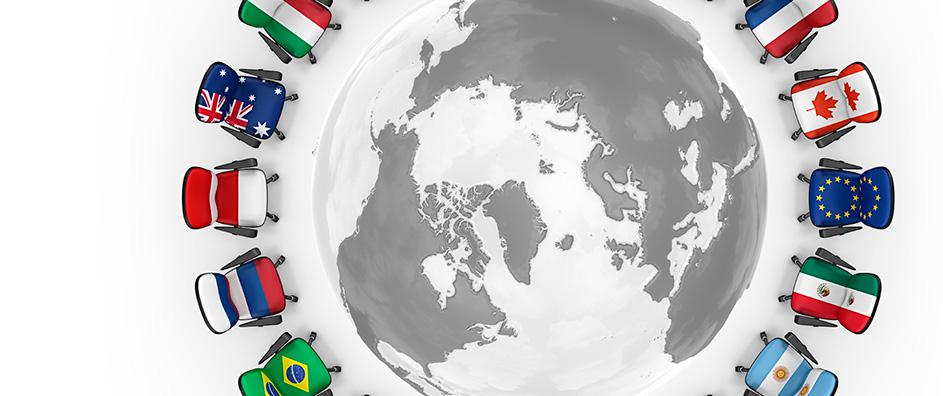
The concept of a world government is a topic that evokes a myriad of emotional and intellectual responses. In a rapidly globalizing world, amidst the chaos of geopolitical tensions and social strife, the Bahá’í teachings present a compelling vision for the establishment of a world government. This discourse not only seeks to illuminate the path toward global governance but also advocates for a profound shift in our collective consciousness. Below are the seven essential steps outlined by Bahá’í thought that could catalyze this transformative journey.
Step 1: Recognition of the Oneness of Humanity
Central to Bahá’í teachings is the principle that all humans are part of a single, interconnected family. Recognizing the oneness of humanity invites individuals to transcend divisive nationalistic tendencies. This paradigm shift encourages a deep-seated understanding that global issues necessitate collective solutions. As individuals embrace this interconnectedness, they foster a sense of responsibility towards one another, cultivating a spirit of unity that is pivotal for a world government.
Step 2: Promotion of Universal Education
Universal education is a cornerstone for empowering individuals and societies. It engenders critical thinking, compassion, and civic responsibility among citizens. In order for a world government to thrive, education must transcend cultural and national barriers, promoting a shared understanding of global citizenship. The Bahá’í teachings advocate for an educational system that not only emphasizes academic knowledge but also moral and ethical development, thereby cultivating informed and conscious individuals who are equipped to participate in global governance.
Step 3: Establishment of a Global Economic System
A significant impediment to the establishment of a world government is the existing economic disparities that persist between nations. The Bahá’í teachings call for an equitable economic system that addresses these inequalities and fosters sustainable development. This necessitates the creation of international policies that prioritize the welfare of all people, rather than the interests of a select few. In doing so, a sense of global solidarity can be cultivated, which is essential for the legitimacy and functionality of a world government.
Step 4: Fostering International Cooperation
The establishment of a world government cannot materialize in isolation; it requires robust international cooperation. This step emphasizes the importance of diplomatic engagement and collaboration across national borders. By creating platforms for dialogue and consensus-building, countries can work together to address global challenges such as climate change, conflict resolution, and public health crises. The Bahá’í teachings advocate for a multilateral approach to governance, whereby nations unite to formulate and implement policies that benefit humanity as a whole.
Step 5: Implementation of a System of World Law
A world government necessitates a legal framework that transcends national laws to ensure justice and equity on a global scale. The Bahá’í teachings underscore the need for a system of world law that provides a cohesive and structured approach to governance. This would not only safeguard human rights but also establish mechanisms for accountability and transparency. By instituting a universally recognized legal system, the path toward a harmonious global society can be paved, grounded in principles of fairness and justice.
Step 6: Cultivation of a Global Culture of Peace
The creation of a world government is inextricably linked to the cultivation of a culture of peace. This entails fostering dialogue among diverse cultures, religions, and ideologies. The Bahá’í teachings emphasize the importance of fostering understanding, tolerance, and mutual respect. Initiatives aimed at promoting intercultural dialogue will reduce prejudices and animosities, paving the way for a cooperative global community. When individuals and nations prioritize peace, the structures of a world government can be established upon a foundation of goodwill and mutual understanding.
Step 7: Engagement of Youth in Global Governance
Finally, the involvement of youth in the processes of global governance is paramount. Young people embody the potential for innovative thinking and dynamic change. The Bahá’í teachings advocate for the active participation of youth in shaping the future of humanity. By providing platforms for young voices to be heard and respected, a more inclusive decision-making process can be established. This not only assures the sustainability of the world government but also engenders a legacy of conscientious global citizenship.
In conclusion, the establishment of a world government is an aspiration rooted in the principled teachings of the Bahá’í Faith. A commitment to recognizing the oneness of humanity, promoting universal education, developing equitable economic systems, fostering international cooperation, implementing world law, cultivating a culture of peace, and engaging youth in governance are all vital steps toward this ambitious goal. As we endeavor to actively participate in this collective vision, the promise of a transformed global society beckons, inviting us to rethink our roles as citizens of a shared world. Together, we can usher in an era of unprecedented unity and prosperity.
