
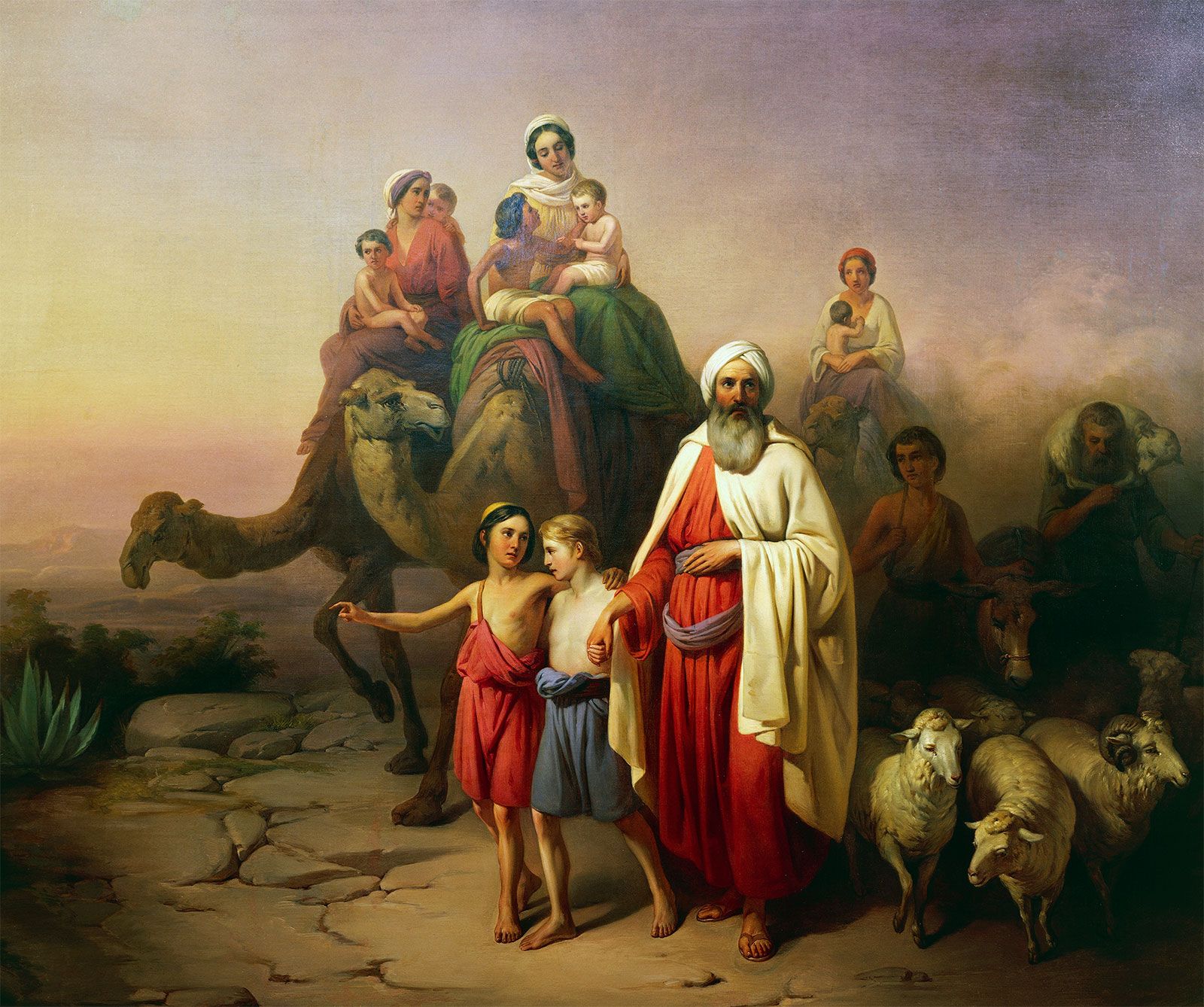
In the tapestry of religious evolution, the narrative surrounding Abraham holds a preeminent position. Revered as a patriarch not solely within the Judeo-Christian tradition but also within Islamic teachings, Abraham’s foundational role transcends sectarian boundaries. His life and teachings espouse a profound relationship with the Divine, encapsulating the attributes of faith, obedience, and covenant. This article delves into the significance of Abraham’s birth, his theological implications, and the transformative teachings that ensue from his life.
Abraham, born Abram in the Ancient Near East, signifies the inception of a new paradigm in humanity’s understanding of God. As the progenitor of monotheism, he ushered in an era where the singular worship of a transcendent deity became paramount. This transition from a polytheistic milieu to one defined by monotheistic belief reverberates through the annals of religious history. His life narrative reaches its zenith in the abode of faith, wherein he exhibited unwavering loyalty to God’s directives, often in the face of profound societal opposition.
The Birth of Abraham is not a mere chronological event; it symbolizes the awakening of humanity’s spiritual consciousness. Within the Bahá’í framework, Abraham is acknowledged as a Manifestation of God, a term designating individuals who reflect divine attributes and convey heavenly teachings. His covenant with God illustrates a reciprocal commitment, predicated on faith and obedience, which is central to understanding the nature of human-divine interactions. The exigency of faith, as illustrated in the Abrahamic covenant, underpins a relational dynamic that invites humanity to engage in dialogue with the Divine rather than adhere strictly to ritualistic observances.
Abraham’s narrative is laden with instances that challenge the corporeal limitations of human existence. One of the most notable accounts is that of his willingness to sacrifice his son, Isaac, an act emblematic of supreme faith. This profound episode serves as a testament to the prioritization of divine command over familial bonds, an assertion of divine sovereignty that underlines the call for radical submission to God’s will. This precedent speaks volumes to individuals traversing the complexities of faith in a modern context, inviting them to reassess their own commitments and allegiances.
The significance of Abraham extends beyond individual acts of obedience; it encompasses the broader implications of his journey. The promise made to him by God, wherein he was assured progeny as numerous as the stars, foreshadows the emergence of diverse religious traditions. This multiplicity enshrines the idea that truth can manifest in varied forms while maintaining a commonality of purpose. Each tradition serves as a conduit for the divine message, enhancing interfaith dialogue and promoting unity amidst diversity—a principle cherished within Bahá’í teachings.
The evolution of Abraham’s identity from Abram to Abraham is itself indicative of a transformative journey. The addition of the divine element—‘El’—to his name signifies a birth not only of a person but of a legacy that transcends temporal boundaries. This evolution mirrors the journey of every believer who seeks to shed misgivings and embrace a spiritual ethos. Consequently, the narrative of Abraham offers profound insights into personal transformation, encouraging individuals to aspire towards spiritual elevation while fostering a commitment to serve humanity.
Moreover, Abraham’s relationship with God serves as a paradigm for understanding the nature of divine love and justice. He stood as an intercessor for humanity, pleading for the salvation of the people of Sodom and Gomorrah—even amidst their moral decay. This aspect of his life underscores the necessity of compassion and the role of the believer as a moral agent in society, tasked with advocating for justice and mercy. Such teachings resonate with contemporary ethical dilemmas, prompting believers to reflect upon their social responsibilities within their communities.
The concept of covenant, pivotal in Abraham’s legacy, extends its roots into the Bahá’í Faith, fostering a profound appreciation for unity and collective progress. The covenant embodies the assurance that God’s guidance endures throughout human history, a navigation through trials and tribulations towards divine purpose. Within the Bahá’í framework, the fulfilling of Abraham’s promise is seen as ongoing, culminating in the emergence of successive prophets who build upon his foundational teachings. Each Manifestation of God encapsulates a segment of divine truth, hence elucidating a progressive unfolding of God’s plan for humanity.
In exploring the teachings inspired by Abraham, individuals are invited to contemplate their own spiritual trajectories. The notion of faith, as demonstrated by Abraham, serves as an anchor within the chaotic waters of modernity. It beckons adherents to reflect on their own responses to divine callings and the degrees of sacrifice they are prepared to embrace. By embodying the essence of Abraham’s teachings, believers can aspire to actualize a more profound connection not only with the Divine but also with their fellow beings, thereby fostering a more harmonious existence.
In closing, the birth of Abraham is not merely a historical episode but a clarion call for spiritual awakening and transformation. His legacy invites a reevaluation of personal and communal commitments, a journey towards unity, and the embrace of a faith that transcends boundaries. Overall, the teachings of Abraham resonate with timeless truths that encourage individuals to embark on a journey marked by divine purpose, ethical living, and profound spiritual inquiry, thus paving the way for a brighter future molded by love, justice, and unity.