
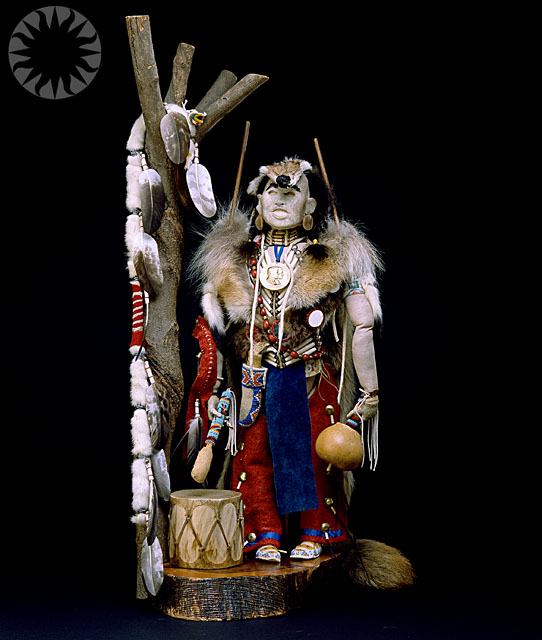
The relationship between Indigenous cultures and Bahá’í teachings is ripe for exploration, particularly when considering the intriguing concept of the Indigenous Teacher-Trickster Paradox. This multifaceted paradigm not only invites readers to re-evaluate preconceived notions regarding the roles of educators and cultural custodians, but also fosters a deeper understanding of the transformative potential inherent in the Bahá’í Faith. This article aims to illuminate the intricate dynamics of this paradox, unpacking the layers of meaning that arise therein.
At the core of this exploration lies the juxtaposition of two archetypal figures: the Indigenous Teacher, emblematic of profound wisdom and cultural knowledge, and the Trickster, often perceived as a subversive agent, deftly maneuvering through the complexities of societal norms. Together, these personas embody a potent dialectic between enlightenment and disruption, offering a unique framework for understanding indigenous epistemologies within the context of Bahá’í teachings.
In many Indigenous cultures, the Teacher is venerated as a font of knowledge, often serving as a custodian of ancestral wisdom, rituals, and traditions. This role transcends mere pedagogy: it involves instilling a sense of identity, community affiliation, and spiritual guidance among members of the tribe. Teachers are typically revered figures, adept in weaving narratives that reflect historical struggles, moral lessons, and the interconnectedness of all life. Their teachings are steeped in the reverence of nature and the cosmos, forming an integral part of community identity.
Conversely, the Trickster embodies a more ambiguous and multifarious role within Indigenous lore. Often characterized as mischievous, cunning, and sometimes disruptive, the Trickster serves as both a catalyst for change and a challenger of the status quo. Far from being merely a figure of caricature, the Trickster provokes thought, questions norms, and instigates alternative perspectives. It is through this lens that one begins to appreciate the Trickster’s essential role in fostering resilience and adaptability within cultural narratives.
The Indigenous Teacher-Trickster Paradox emerges from the interplay of these two figures, challenging the binary oppositions that often characterize Western thinking. It serves as a reminder that wisdom is not always a product of authority or traditional structures; rather, it can emanate from the unconventional, the unexpected, and the rebellious spirit of the Trickster. This duality can be paralleled within the Bahá’í perspective, which emphasizes the necessity of both reasoned guidance and the courage to question established norms.
From a Bahá’í standpoint, the Progressive Revelation of religious truths serves as a guiding principle that validates the individual’s quest for understanding and spiritual growth. This emphasis on personal inquiry dovetails beautifully with the Trickster’s role as a provocateur, affirming that questioning is not antithetical to faith; it is rather a vital component of it. The act of questioning leads to broader comprehension and deeper engagement with the fundamental principles of unity, equality, and justice—key tenets of the Bahá’í Faith.
Emphasizing the significance of both the Teacher and the Trickster opens the door to a more nuanced comprehension of cultural diversity. The emergence of Indigenous voices within Bahá’í discourses has the potential to enrich the understanding of global oneness, bringing forth unique perspectives that might otherwise remain overshadowed. The Indigenous Teacher embodies the rich tapestry of cultural wisdom, while the Trickster incites a necessary recalibration of thought paradigms, encouraging a movement away from rigid adherence and toward vibrant, living beliefs.
This paradigm encourages a shift in perspective that is both vital and timely. In an era fraught with polarization and cultural disconnection, the convergence of Indigenous teachings and Bahá’í principles becomes a beacon of hope. It cultivates curiosity about the variances in interpretation and the myriad ways people engage with their spiritual paths. As such, it compels audiences to consider how diverse traditions can synergize rather than simply co-exist.
The Bahá’í teachings about the fundamental oneness of humanity resonate deeply within this context. They posit that irrespective of one’s cultural or ethnic background, every individual contributes to the collective understanding of truth. This ethos aligns harmoniously with the notion of the Indigenous Teacher as the purveyor of communal identity and the Trickster as a disruptive innovator, suggesting that both roles are essential for the evolving narrative of humanity.
Moreover, this paradox highlights the need for humility within spiritual pursuits. Acknowledging that wisdom can be found in both revered traditions and rebellious narratives encourages a posture of learning rather than one of prescriptive authority. The humility necessary for such a stance invites curiosity and foster dialogue, encouraging individuals to engage with Bahá’í principles while simultaneously embracing Indigenous wisdom.
In conclusion, the Indigenous Teacher-Trickster Paradox serves to illuminate the multifaceted intersections between Indigenous cultures and Bahá’í teachings. It presents a compelling narrative that champions both the revered and the rebellious, allowing a fuller exploration of wisdom that exists beyond conventional frameworks. Rather than viewing these roles as dichotomous, a synergistic approach enriches the tapestry of spiritual understanding, encouraging a holistic embrace of diverse traditions. Ultimately, this shift in perspective beckons us to remain curious, open-minded, and willing to engage with the complexities of our shared human experience.