
The Bahá’í Faith, a global religion unearthing the profound connections between humanity and the divine, commemorates two remarkable and intertwined events in its liturgical calendar – the birth of Bahá’u’lláh and the birth of the Báb. These twin events hold paramount significance, not only marking the genesis of two Central Figures, but also embodying the essence of the Bahá’í teachings: unity, revelation, and progressive unfoldment of the Will of God. The observance of these twin birthdays offers a fascinating glimpse into the philosophical depths of the Bahá’í teachings.
The Birth of Bahá’u’lláh, occurring on November 12, 1817, in Tehran, Iran, heralds a pivotal moment in spiritual history. Concurrently, the Birth of the Báb, taking place on October 20, 1819, in Shiraz, Iran, represents the inception of a new dispensation destined to culminate in the establishment of a unified world order. This dual celebration exemplifies a unique convergence of prophetic figures, each serving as a harbinger of a transformative age in human existence. The phenomenon of twin birthdays delves deeper than mere chronology; it signifies the interdependence of their roles in the divine plan.
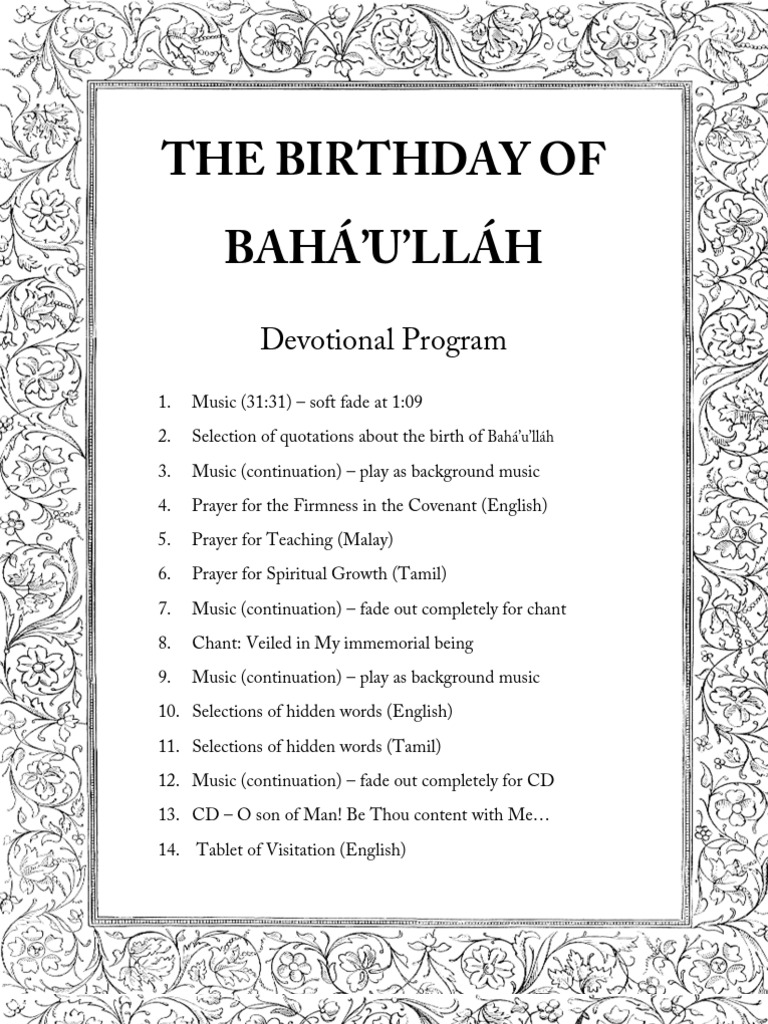
On this day, also known as the Day of the Covenant, adherents engage in acts of devotion and reflection. The ceremonial aspects of the observance are steeped in history and enriched with profound meaning. Communities gather to partake in prayers, readings from their sacred texts, and discussions about the teachings of Bahá’u’lláh and the Báb. This collective remembrance fosters a sense of unity among Bahá’ís and serves to elevate the spiritual consciousness of attendees, reinforcing their commitment to the principles espoused by these revered figures.
The fundamental teachings of Bahá’u’lláh encompass themes such as the oneness of humanity, the equality of the sexes, and the harmony of science and religion. Such concepts are not merely theoretical postulates; they resonate with the deepest yearnings of individuals across disparate cultures and epochs. The observation of the twin birthdays allows Bahá’ís to reflect on how these teachings have been revolutionarily applied in both personal and communal spheres. The joyous revelry that accompanies this day evokes a shared celebration of progress achieved and aspirations yet to be fulfilled.
The fascination surrounding the twin birthdays may stem from their inherent symbolism. Within the Bahá’í framework, these figures embody the duality of human existence: the spiritual and the material, the individual and the collective. The Báb’s innovative teachings invigorated a successive generation, while Bahá’u’lláh expanded upon those revelations, crafting a comprehensive vision for the future. This dialectical relationship between the two figures underscores a deeper metaphysical inquiry into the nature of divine revelation itself.
The context in which the Báb and Bahá’u’lláh emerged is replete with sociopolitical and historical complexities. The tumultuous period of the 19th century in Persia was characterized by significant upheavals, both spiritually and materially. The existential trials faced by these two figures encapsulate the broader struggle for justice and the quest for truth that spans humanity’s history. By commemorating their births, Bahá’ís honor not only the founders of their Faith but also the unyielding pursuit of a just society that transcends temporal limitations.
This dual observance encourages Bahá’ís to adopt a contemplative stance towards their own lives. It invites introspection concerning how the teachings of these Founders guide ethical conduct and foster harmonious relationships within diverse communities. The synthesis of the Báb’s and Bahá’u’lláh’s teachings provides a template through which individuals can navigate complex moral terrains, articulating a commitment to social betterment informed by spiritual principles.
Moreover, the glorification of these birth narratives operates as a vehicle for fostering intercommunal dialogue. In a world fragmented by sectarian strife and ideological dissension, the principles proclaimed by Bahá’u’lláh and the Báb beckon adherents to explore avenues of collaboration and mutual respect among different faith traditions. Just as the twin births are inseparable within the Bahá’í celebratory framework, so too must humanity recognize its interconnectedness in the face of adversity.
The Bahá’í community’s observance of these momentous occasions contrasts with a wider societal apathy towards spiritual commemorations. Indeed, there exists a profound irony in the juxtaposition of the joyous celebrations of these births against a backdrop often characterized by existential despair and spiritual vacuity. The question arises: why has this particular celebration garnered such devoted adherence among Bahá’ís? At its core, this speaks to an intrinsic understanding of purpose and destiny, catalyzed by the teachings of Bahá’u’lláh and the Báb. This awareness fosters a profound reverence and a sense of duty shared by adherents around the globe.
In conclusion, the glorious twin birthdays of Bahá’u’lláh and the Báb serve as a compelling focal point for the examination of key Bahá’í teachings. They invite reflection on broader themes of unity, justice, and the sacred pursuit of truth. Through rituals of remembrance, Bahá’ís invigorate communal ties and deepen their individual commitments to the principles espoused by their Central Figures. By embracing this dual observance with fervor and intentionality, Bahá’ís contribute to the ongoing conversation surrounding the necessity of harmony among diverse peoples while illuminating the pathway towards a more inclusive future.