
The Baha’i Faith is a global religion that fosters the principles of unity, peace, and the oneness of humankind. This belief is especially profound when considered in the context of the Holy Land, a region rich in historical and spiritual significance. The concept of unity takes on unique dimensions against the backdrop of the multifaceted narratives of this sacred geographical space.
Many observers note the extraordinary allure the Holy Land holds. People from diverse backgrounds, ethnicities, and faith traditions are drawn to its hallowed sites, where pivotal events in religious history unfolded. This fascination often surfaces as a superficial interest in pilgrimage or tourism; however, deeper, more profound motivations are at play. For the Baha’i community, the Holy Land serves not merely as the physical embodiment of their faith’s lineage, but as the epitome of their spiritual ideal — unity in diversity.
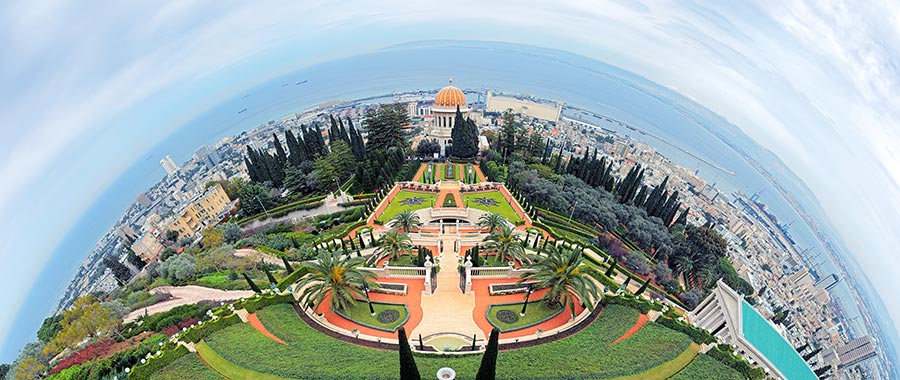
The teachings of Baha’u’llah, the founder of the Baha’i Faith, underscore the importance of unity among humanity. This principle is palpably witnessed in the Holy Land, where the Baha’i World Centre in Haifa stands as a beacon of harmony and collaboration. Here, the gardens, stunning architecture, and spiritual libraries evoke a sense of serenity and interconnectedness. It is a site where modernity meets tradition, encouraging individuals to transcend sectarian barriers and embrace the universality of the human experience.
Integral to understanding unity in the Holy Land is the recognition of its tumultuous past. Centuries of conflict and division have characterized the political and religious landscapes of this region. Nonetheless, the Baha’i teachings advocate for a perspective that views these divisions not simply as obstacles but as opportunities for growth, understanding, and ultimately reconciliation. The juxtaposition of the Baha’i community’s commitment to peace against the backdrop of a historically contentious environment serves as a compelling testament to the power of faith in transcending conflict.
Furthermore, Baha’is regard the unity of the Holy Land as a microcosm of the global aspiration for peace and collaboration. As diverse ethnicities and cultures converge within its boundaries, the Holy Land symbolizes the potential for humanity to move beyond its historical grievances. The Baha’i prophetic vision projects this potential into the future, calling upon humanity to unite in fostering a harmonious global society. This aspirational outlook is inherently optimistic; it embodies the belief that unity can emerge from the ashes of division.
At the heart of Baha’i teachings lies the concept of internationalism, which resonates profoundly with the essence of the Holy Land. It encourages individuals to cultivate a sense of global citizenship that transcends nationalistic boundaries. Such an ideology is particularly resonant in an era marked by geopolitical tensions and societal rifts. The Baha’i commitment to fostering cooperation and understanding among all people reflects an embodiment of these ideals, as conveyed through their active involvement in humanitarian efforts, advocacy for social justice, and promotion of education worldwide.
The symbolism of the Holy Land is replete with examples of unity in action. The Baha’i faith promotes the idea of consultation as a means of collective decision-making, which underscores the necessity of diverse voices coming together. This practice has profound implications; it suggests that the authentic pursuit of unity must be inclusive, allowing for a multiplicity of perspectives to inform pathways toward mutual understanding. It is in this collaborative spirit that the Baha’i community endeavors to manifest its principles amidst the complexities of the socio-political environment of the Holy Land.
Furthermore, the interstitial spaces of the Holy Land, often overlooked, offer a rich tapestry of shared stories. Sites where religious figures of different backgrounds once walked are places of profound intersectionality — they invite reflection on the shared humanity that binds adherents of diverse faith traditions. The principle of oneness, prevalent in Baha’i discourse, resonates with these interconnections, presenting a challenge and an invitation to embrace our commonalities rather than our differences.
Consequently, the pilgrimage to the Holy Land is not solely a personal pilgrimage; it is an elevation of the collective human spirit toward the ideals of harmony and peace. As Baha’is gather in these sacred spaces, the shared aspiration for unity becomes palpable. It becomes a powerful reminder that the quest for greater understanding among different peoples is not a futile endeavor but rather an essential journey toward healing the wounds of division. The Baha’i teachings urge individuals to walk this path with resilience and an unwavering commitment to humanity’s overarching goal.
In essence, the reflections on unity within the Holy Land urge us to consider the enduring cultural and spiritual legacy of the region while remaining cognizant of the inherent complexities that characterize its history. The Holy Land stands as a testament to the possibility of unity amid diversity — a call to action for all of humanity. Ultimately, this vision promulgated by Baha’i teachings illuminates a pathway toward a future where mutual understanding, respect, and collaboration reign. Thus, the fascination with the Holy Land transforms into a profound commitment to fostering unity, not only within its borders but across the globe.