
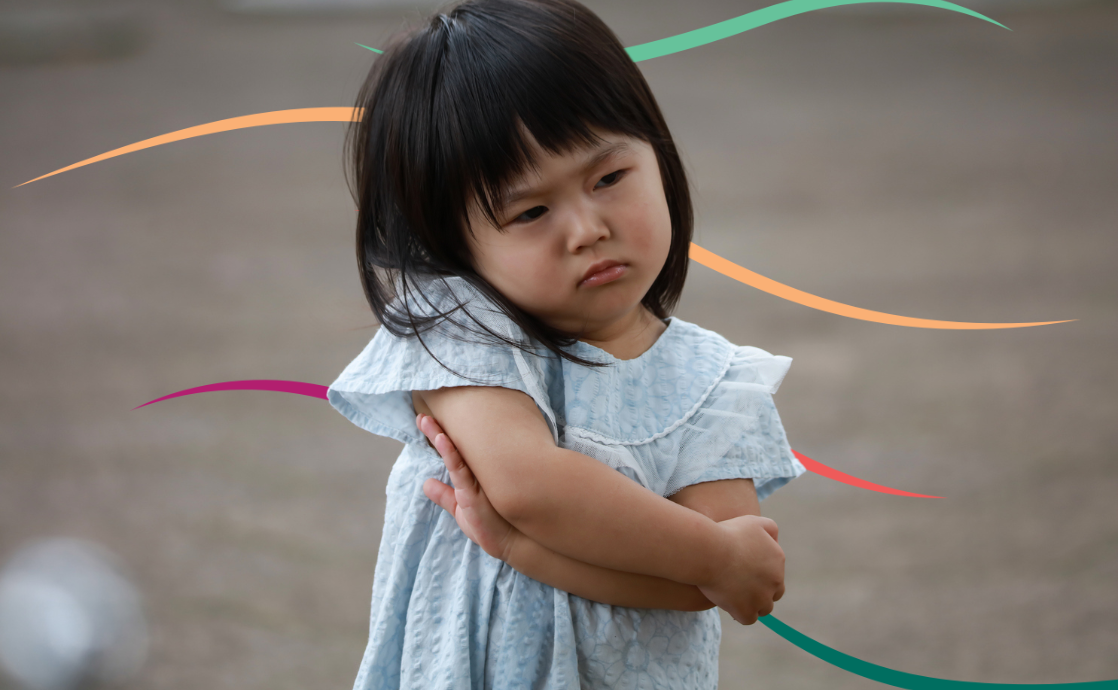
When confronted with a child’s declaration of “Go away!”, many caregivers may instinctively react with frustration or hurt feelings. However, a deeper exploration into the Bahá’í teachings can illuminate this emotionally charged phrase, transforming what may seem like a rejection into an enlightening opportunity for growth in both the child and caregiver. The essence of Bahá’í principles rests on the tenets of love, understanding, and unity, allowing us to navigate these challenges with grace and insight.
First and foremost, it is crucial to acknowledge the emotions behind the child’s words. Children express their feelings in immediate and unfiltered ways. When a child asserts their desire for solitude, it often signals an unmet need for independence, personal space, or even the processing of overwhelming emotions. Bahá’í teachings encourage empathy, enabling adults to cultivate a deeper understanding of the child’s psyche. Thus, rather than reacting with indignation, consider the underlying sentiment driving the child’s insistence that you “go away.”
From a Bahá’í perspective, effective communication is a cornerstone of relationships. Approaching the situation with open-ended questions may facilitate a safe environment for dialogue. Querying the child about their feelings can elucidate their needs. For instance, posing a question like, “Can you tell me more about why you don’t want me around right now?” does not just validate their feelings; it assures them that their voice matters. This technique fosters trust and encourages healthy emotional expression, an idea paramount in raising emotionally intelligent individuals.
Moreover, it is helpful to adopt a contemplative approach; children often mirror the emotional landscapes they inhabit. What may be perceived as a cry for distance may indeed reflect the caregiver’s own stress or frustrations. The Bahá’í principle of self-reflection suggests that caregivers must first examine their emotional states before responding to a child’s challenges. This understanding can transform situations into teaching moments for both parties, furthering emotional resilience.
Once the child’s feelings are properly understood and validated, caregivers should strive to educate young ones on the spectrum of emotions. Children, much like adults, require guidance in recognizing and articulating their emotions. Introducing them to the vocabulary of feelings can empower them to communicate their desires more constructively. A Bahá’í perspective advocates for teaching love and kindness as foundational virtues, ultimately enriching the emotional lexicon available to children.
Additionally, finding the balance between allowing a child their space and maintaining a connection is fundamental. Children might indeed need intermittent periods of solitude. However, establishing parameters around this request can teach boundaries. Engaging children in dialogues about appropriate times for solitude—say during play or quiet time—helps them learn that seeking space is perfectly valid but must coexist with healthy social interactions.
Establishing rituals can also be beneficial. The power of routine possesses the capacity to help children find stability amidst their emotional upheaval. Bahá’í principles honor the significance of community and unity, or ‘the oneness of mankind.’ This means that caregivers can introduce rituals that signify togetherness while also respecting personal space. For instance, a calm conversation prior to engaging in separate activities can serve as a bridge. “Let’s set our timer for fifteen minutes—then we can come back together and share our ideas,” combines respect for solitude with the affirmation of connection.
Furthermore, demonstrating the understanding that solitude can be regenerative is an important lesson in emotional well-being. Just as adults sometimes seek quietude to recharge, children should also perceive this need as legitimate. In doing so, caregivers can outline the importance of balance in life by simultaneously valuing alone time and togetherness. References from Bahá’í writings can enrich your narratives here, as the teachings elaborate on the synergy of individual growth within the broader context of community.
Fostering curiosity also plays a vital role in this discourse. By remaining inquisitive about the child’s feelings and desires, caregivers can tap into a transformative understanding of how children experience their world. For example, if a child desires solitude after an emotionally taxing day at school, the caregiver’s inquiry into their day can elicit revelations that would otherwise remain unexpressed. By allowing a space for curiosity, caregivers can turn mundane exchanges into meaningful conversations—thereby elevating the interaction into a learning experience.
The essence of this dialogue ties back to Bahá’í aspirations of cultivating loving relationships built on understanding, trust, and compassion. In essence, when a child utters “Go away,” it serves as an invitation—an opportunity to foster growth, compassion, and connection rather than a rejection of existing bonds. The philosophy teaches that promoting understanding and demonstrating unconditional love resonates throughout all relationships, thereby allowing the nurturing space needed for emotional development. In such interactions, caregivers not only support their children in navigating difficult emotions but also model the core principles that Bahá’ís strive to manifest in their daily lives.
In conclusion, the seemingly simple phrase “Go away!” can be viewed through a transformative lens when embedded within the principles of the Bahá’í faith. This shift in perspective encourages caregivers to engage deeply with their children’s emotions, thus fostering a nurturing environment that advances emotional intelligence and mutual respect. Remember, every utterance, even those that may come as a dismissal, space for dialogue and understanding lies beneath the surface, waiting to be uncovered.