
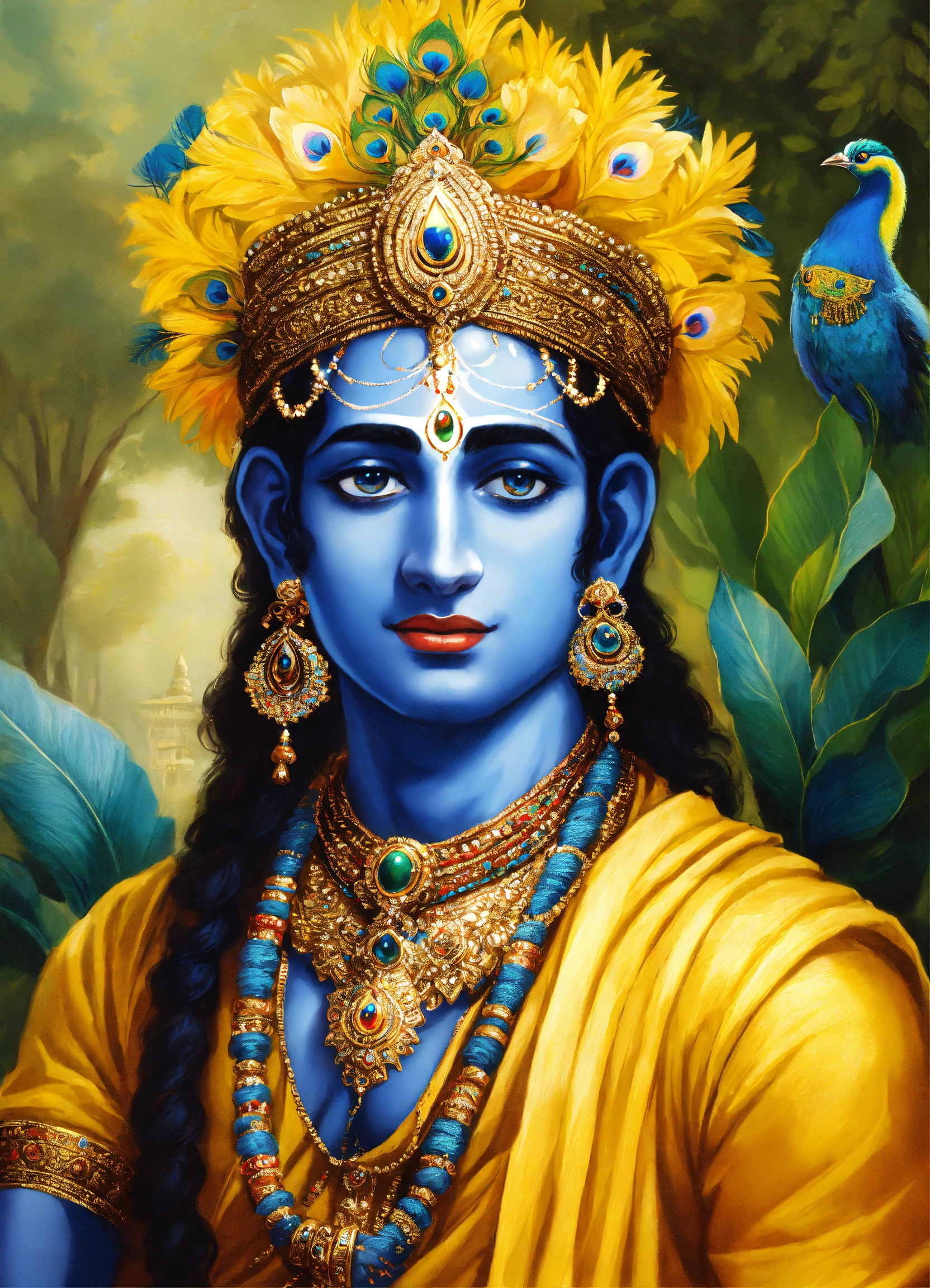
The teachings of the Bahá’í Faith offer profound insights into the nature of divinity and the various spiritual luminaries throughout history. Among these figures, Lord Krishna of Hinduism stands out as a venerated teacher whose life and message resonate across different cultures and epochs. As we delve into the identity of Krishna and the Bahá’í perspective concerning his return, we uncover a tapestry rich in theology, symbolism, and spiritual significance.
Understanding Krishna begins with an examination of his life and teachings. Traditionally depicted with blue skin, Krishna is emblematic of the divine and the infinite. His narratives, most notably chronicled in the Mahabharata, particularly within the Bhagavad Gita, present him as both a god and an exemplar of dharma (righteousness). He embodies the duality of existence, encapsulating both the transcendent and immanent aspects of divinity. His teachings advocate for devotion, righteous action, and the intrinsic unity of all spiritual seekers.
Krishna’s narrative is pivotal to Hindu thought, representing the interplay of divine love and human experience. His life is replete with stories illustrating the principles of love, compassion, and moral integrity. From playful childhood exploits to profound philosophical dialogues, Krishna’s character serves as a synthesis of divine qualities and relatable human traits. This duality invites individuals to recognize the divine in themselves and in others, fostering an awareness of interconnectedness.
From a Bahá’í perspective, the concept of divine messengers extends beyond the confines of singular religious narratives. Bahá’ís believe in the continuation of divine revelation through various Prophets and Manifestations of God, including Krishna, who played a vital role in guiding humanity toward spiritual advancement. The Bahá’í teachings posit that each Manifestation, while distinct in their cultural and temporal context, contributes to the unfolding of a singular divine purpose—promoting love, unity, and the cultivation of moral character.
The question of whether Krishna has returned is a significant inquiry that speaks to the Bahá’í understanding of progressive revelation. Bahá’ís perceive the return of spiritual figures not as a literal reincarnation but as a metaphorical awakening of divine attributes within humanity. In this light, the spirit of Krishna lives on through the teachings and essence of subsequent Manifestations, most notably Bahá’u’lláh, the founder of the Bahá’í Faith.
Bahá’u’lláh elucidates in his writings that the essence of all spiritual teachings culminates in the unity of the world’s major religions. He emphasizes that the core objectives relevant to Krishna’s teachings— such as justice, love, and service to humanity— are echoed in his own revelations. Thus, the Bahá’í Faith welcomes the teachings of Krishna as part of the larger narrative of divine unfoldment.
Moreover, the Bahá’í perspective encourages adherents to explore the positive contributions of different religious traditions. By recognizing the significance of Krishna alongside other spiritually revered figures, Bahá’ís promote an ethos of inclusivity and understanding. This approach catalyzes a shift in perspective, empowering individuals to see beyond the superficial differences between religions to uncover the shared truths that bind humanity.
Engaging with the teachings of Krishna invites a reconsideration of personal and collective spiritual journeys. Examining his life through the Bahá’í lens fosters curiosity and provokes inquiries into broader spiritual realms. Questions arise: How do the attributes ascribed to Krishna inspire contemporary faith communities? In what ways can Bahá’ís embody the virtues extolled by Krishna in their daily lives?
Additionally, the theme of divine return can be explored in the context of societal transformation. The Bahá’í Faith posits that each Manifestation of God heralds not only a spiritual awakening but also a social evolution aimed at establishing justice, equity, and global unity. In this sense, the return of Krishna symbolizes a resurgence of harmony and reconciliation among all peoples, resonating deeply with the Bahá’í belief in a collective spiritual enterprise.
The pursuit of truth within the teachings of Krishna and the narratives surrounding his life compels adherents to seek wisdom beyond the written word. Belief in the interconnectedness of all divine teachings fosters an environment where dialogue, education, and exploration thrive. The Bahá’í community, by recognizing Krishna’s eternal relevance, contributes to a deeper understanding of both unique and universal spiritual truths.
In conclusion, the inquiry into “Who Was Krishna and Has He Returned?” transcends mere historical or theological debate. It invites engagement with significant spiritual inquiries that echo throughout the ages. The Bahá’í perspective situates Krishna within the continuum of divine revelation, highlighting a vision of unity and love that inspires hope and action in a fragmented world. Embracing the virtues exemplified by Krishna, while simultaneously acknowledging the role of Bahá’u’lláh as part of this divine continuum, leads to a richer spiritual life and a reinforced commitment to advancing the principles of justice and unity in today’s society.