
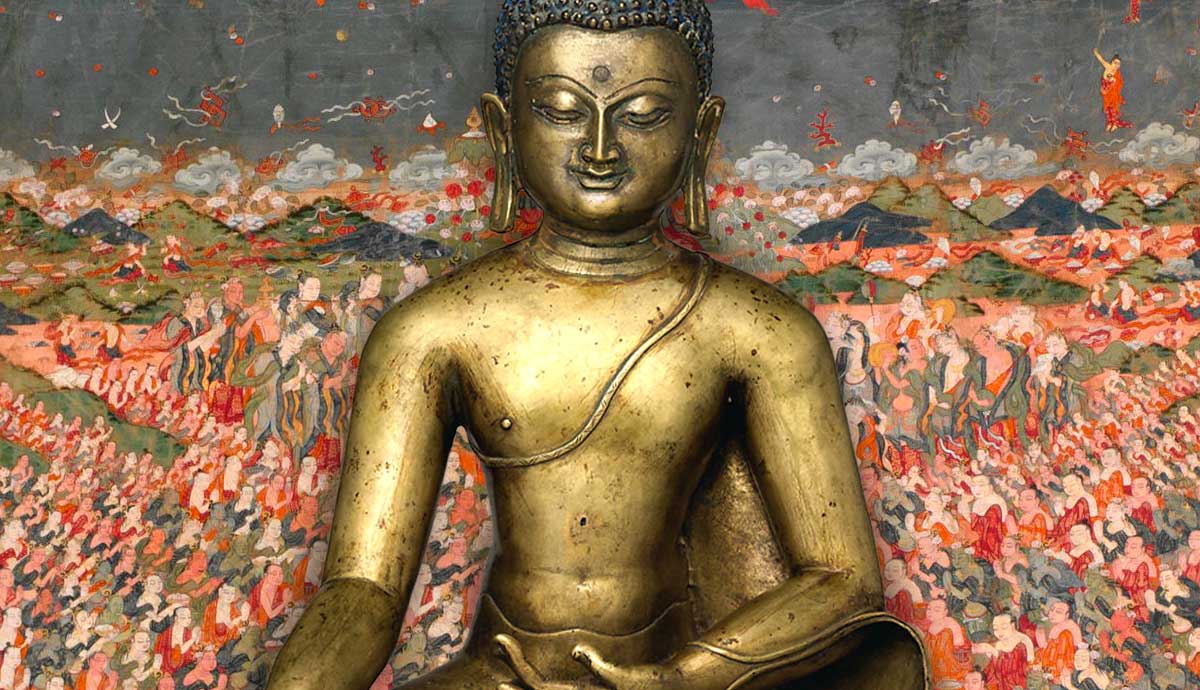
The myriad of spiritual paths and doctrines across human history often incites an intrinsic curiosity about the motivations and meanings behind revered figures. Among these luminaries, the Buddha stands out, revered not just for the teachings he imparted but also for the profound impact his life and philosophy continue to have on countless individuals. Within the context of Baha’i teachings, the relationship with the historical and spiritual figure of the Buddha elicits a deeper exploration into universality, the nature of truth, and the overarching framework of divine guidance throughout the ages.
At the core of Baha’i belief lies the understanding of the unity of all religions. This principle posits that the world’s spiritual leaders, including the Buddha, have contributed to the collective advancement of humanity by delivering divine messages tailored to their specific cultural and historical contexts. The Buddha, born Siddhartha Gautama, achieved enlightenment and subsequently articulated a doctrine that emphasizes compassion, mindfulness, and the alleviation of suffering—tenets that resonate with Baha’i values.
One of the primary reasons Baha’is reflect on the life and teachings of the Buddha is the convergence of ethical principles. The core teachings of Buddhism focus on the Four Noble Truths, profoundly addressing human suffering and the path towards liberation through the Eightfold Path. These teachings find a striking parallel in Baha’i tenets, which advocate for justice, love, and moral rectitude as essential components of spiritual development. The emphasis on ethical living in both traditions provides a foundation for mutual respect and dialogue between different faiths. This interreligious relationship underscores the Baha’i principle of harmonious coexistence among varied belief systems.
However, the appeal of the Buddha transcends mere doctrinal similarities. The historical figure embodies an existence that exemplifies the quest for inner truth and the courage to challenge societal norms. He turned away from a life of privilege to seek enlightenment, illustrating the profound human journey toward understanding the nature of reality. This narrative resonates deeply with the Baha’i ethos, which calls for individual investigation of truth and personal responsibility in the pursuit of spiritual growth. In this sense, the Buddha not only serves as an inspiring figure but also as a mentor illuminating the path to self-discovery and moral evolution.
As we delve deeper into why the Buddha captivates Baha’i hearts and minds, we encounter the theme of interconnectedness. Baha’is are encouraged to view all humanity as part of a singular family, and the Buddhist teaching of dependent origination reinforces this worldview by elucidating the interconnected nature of all existence. By recognizing that every action and thought reverberates through the web of life, individuals cultivate a sense of compassion that aligns with both Buddhist and Baha’i principles. This understanding fosters a profound respect for all beings, enhancing goodwill and empathy in an increasingly fractured world.
The teachings of the Buddha further illuminate the Baha’i perspective on the cyclical nature of revelation. Just as the sun rises and sets, exposing different parts of the Earth to light, each religious manifestation brings forth new insights while reinforcing the eternal truths established by previous prophets. The Baha’i Faith recognizes the Buddha as a Manifestation of God, who, like other figures such as Jesus Christ and Muhammad, played a pivotal role in guiding humanity towards greater spiritual clarity. These cyclical revelations highlight humanity’s collective evolution and the continuous unveiling of divine attributes, ultimately contributing to a more profound understanding of God’s purpose.
In examining the relevance of the Buddha within the framework of Baha’i teachings, one cannot overlook the emphasis on personal transformation. Baha’is strive for inner purity and the refinement of character, recognizing that personal development directly influences societal progress. The Buddha’s call for mindfulness and self-examination inspires adherents to cultivate a conscious existence, leading to a profound shift in how one interacts with the world. In this regard, the principles of Buddhism act as catalysts for the Baha’i commitment to service, encouraging followers to engage actively in alleviating the plight of the marginalized and fostering social justice.
Moreover, the reflection on the Buddha invites Baha’is to engage in an introspective dialogue about the meaning of faith and the nature of spirituality. The Buddha’s teachings challenge practitioners to question preconceived notions of identity and attachment. This inquiry resonates with Baha’i teachings that stress the importance of overcoming material distractions and striving for a high moral caliber. Contemplating the essence of impermanence highlighted in Buddhism serves as a crucial reminder for Baha’is to prioritize spiritual over material pursuits.
In conclusion, the enduring fascination with the Buddha within the context of Baha’i teachings unveils a complex tapestry of shared values, reverence for truth, and an appreciation for the rich diversity of spiritual paths. Recognizing the Buddha not merely as a historical figure but as an embodiment of profound wisdom equips Baha’is with insights that enrich their spiritual journey. Embracing the exhortations of the Buddha fosters a deepened sense of empathy, growth, and moral responsibility, inviting seekers to actively contribute toward a harmonious world. In our ever-interconnected reality, the profound teachings of the Buddha continue to resonate, reminding us that the pursuit of enlightenment and understanding is a universal quest, bridging the divides of culture, tradition, and belief.