
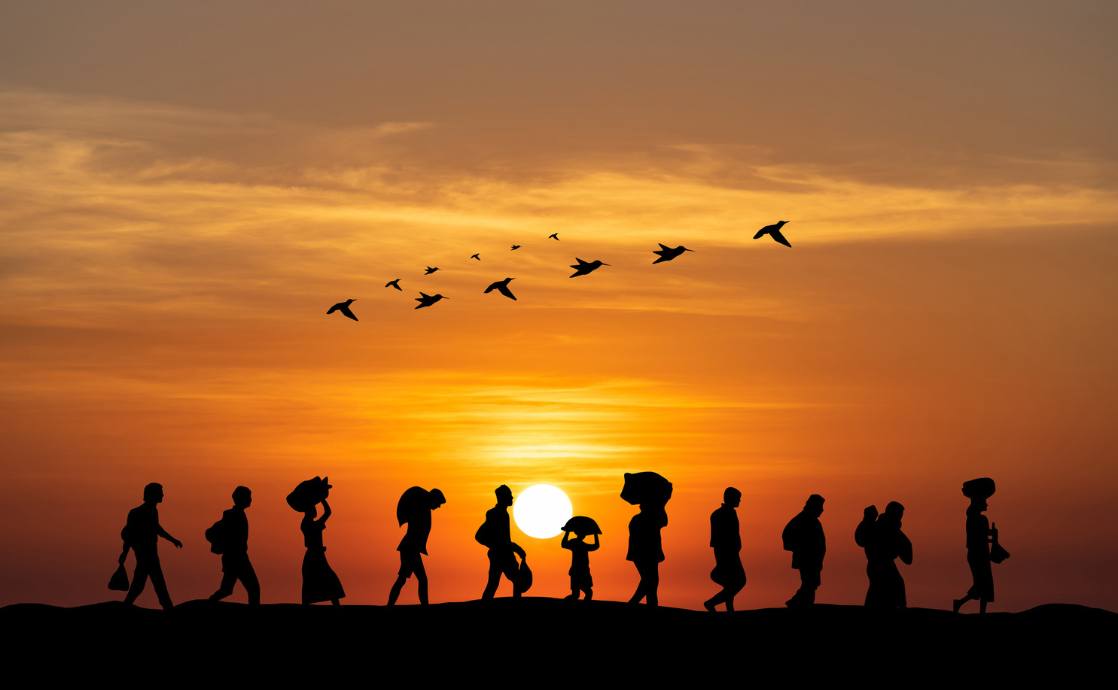
The act of walking transcends mere locomotion; it encapsulates a confluence of movement, migration, and meaning that resonates deeply within the fabric of human experience. In examining the Bahá’í teachings, one encounters a multifaceted perspective on the journey of life—a metaphorical and literal odyssey that illuminates the necessity of purpose, intention, and reflection in our daily sojourns. This article seeks to explore the enigmatic relationship between walking, migration, and the intrinsic significance assigned to these acts through the prism of Bahá’í principles.
To embark on this exploration, it is imperative to define what constitutes “walking” in both concrete and abstract terms. At its most fundamental level, walking signifies the physical act of traversing space. Yet, it serves as a metaphorical expression of humanity’s quest for enlightenment, connection, and understanding. The Bahá’í teachings posit that such journeys—be they spatial or spiritual—are imbued with significance, shaping not only individual identity but also collective destiny.
The Bahá’í Faith invites followers to embrace the notion of movement as a divine catalyst for transformation. The physical act of walking can symbolize the pursuit of knowledge, faith, and community. It encourages individuals to introspect, engage, and commune with their environment, catalyzing a dramatic shift in perspective. The act of walking becomes a ritualistic embodiment of our collective search for purpose—an opportunity to find clarity amidst chaos.
Moreover, walking often coexists with the theme of migration, which represents a broader narrative in the Bahá’í teachings—one that encompasses spiritual migration towards higher consciousness. Migration, in the context of the Bahá’í worldview, transcends mere geographical relocation; it embodies a spiritual journey toward divine proximity. The essence of migration relates not only to physical displacement but also to the necessity of cultural and spiritual evolution.
The Bahá’í teachings affirm that humanity is inextricably linked through the shared experience of movement. The narrative of migration reflects an innate human desire to seek betterment and fulfillment—a theme that pervades religious texts across various cultures. These chronicles emphasize the importance of community connection, the cultivation of virtues, and an understanding that all beings share the earth as a sacred trust, fostering unity among the diverse tapestry of human existence.
In this vein, walking can be viewed as an expression of solidarity. When individuals walk together, their footsteps, in harmonious cadence, serve as a symbol of shared aspirations, intertwined destinies, and collective endeavors. The Bahá’í teachings underscore the significance of community engagement; walking in companionship—whether literally or figuratively—reinforces the bonds of friendship and mutual support, allowing individuals to traverse the often turbulent landscape of life with grace and resilience.
Furthermore, the symbolism of walking extends to the realm of self-discovery. Each step taken can provoke reflection, an opportunity to ponder one’s beliefs, values, and motivations. The Bahá’í Faith emphasizes the importance of personal growth through introspection and critical examination of one’s thoughts and actions. Walking can serve as a contemplative act, encouraging individuals to listen to the whispers of their soul and the realities of their surroundings. Such awareness can foster empathy, nurturing a deeper understanding of the varied experiences that shape humanity.
The concept of walking as a spiritual exercise is eloquently captured in the writings of Bahá’í prophets, who advocate for the necessity of continuous movement toward spiritual advancement. It is through the act of walking, both physically and metaphorically, that individuals embark on a quest for higher truths, discovering new dimensions of existence as they navigate the complexities of life. The transition from ignorance to understanding resembles the journey of a traveler forging new paths, revealing the importance of embracing change and uncertainty.
As humanity grapples with the challenges of migration in contemporary society—be it due to conflict, climate change, or socio-economic factors—the Bahá’í teachings call for a compassionate and holistic response to these migrations. The plight of displaced individuals echoes the broader themes of movement and migration integral to human experience. By actively engaging with and addressing the root causes of migration, individuals can fulfill their moral and spiritual obligations to assist those in need, embodying the principles of loving-kindness and justice.
Recognizing that pedestrian activities are often imbued with significance can radically transform one’s worldview. Analyzing the implications of walking, particularly through a Bahá’í lens, encourages individuals to consider movement not merely as a mode of transportation, but as a conduit for meaningful engagements and societal contribution. The idea that every step taken can potentially create ripples of positive change fosters a sense of empowerment, prompting an awakening to one’s agency within the larger narrative of existence.
In conclusion, the Bahá’í teachings on walking, migration, and meaning enrich our understanding of the spiritual journey inherent in human life. By embracing the multifaceted dimensions of movement, we can cultivate a deeper awareness of our interconnectedness and responsibilities to one another. Walking becomes not just an act of locomotion, but a profound metaphor for the continual striving towards unity, purpose, and enlightenment. Through intentional reflection and shared journeys, we can unearth the rich layer of meaning that lies within our steps, inviting a continually evolving narrative for all humanity. Thus, the essence of walking transcends the physical realm, becoming a sacred pilgrimage towards collective betterment and spiritual awakening.