
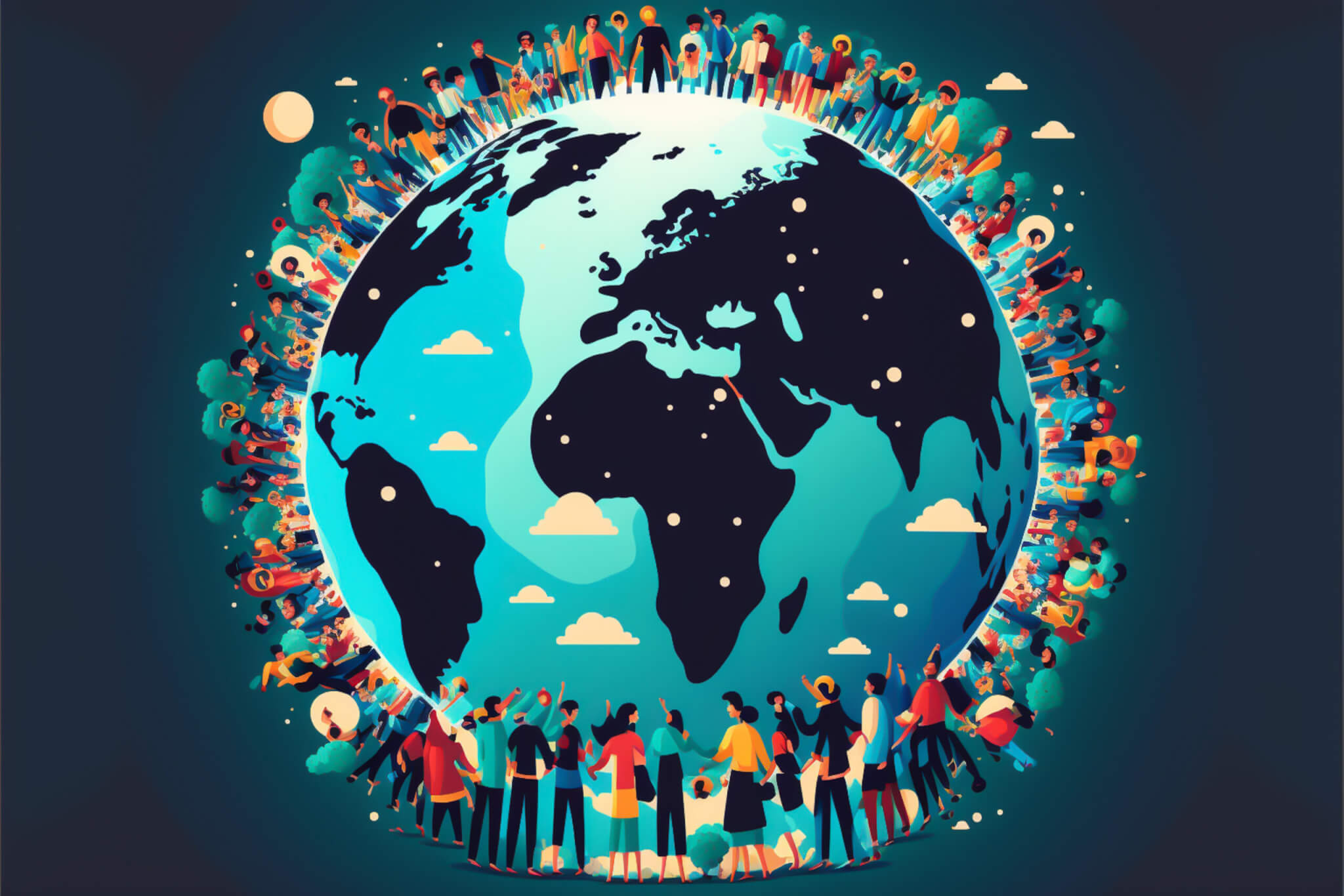
In the realm of global discourse, the topic of population growth has become increasingly prominent. As the world approaches an estimated population of 8.5 billion people by the 2050s, juxtaposed against the Bahá’í teachings on the nature of humanity, a provocative question arises: Is it the quantity of individuals that truly matters, or should we prioritize the qualities that each person embodies? This question not only invites a multifaceted analysis but also challenges our preconceived notions of what constitutes a thriving society.
To comprehend the essence of this inquiry, we must first delve into Bahá’í principles concerning the individual and the collective. The Bahá’í Faith posits that every human being is a critical component of the whole, likened to individual cells in a living organism. Each person possesses inherent dignity and worth, endowed with the potential to contribute positively to the betterment of society. Thus, the Bahá’í teachings assert that quality of character—such as integrity, compassion, and service—should take precedence over mere numerical assessments of population growth.
In the Bahá’í perspective, population is not merely a statistic but a vital tapestry interwoven with diverse threads of experience, knowledge, and spirituality. Each individual brings unique qualities that harmonize with others in a symphony of human development. Rather than a linear view of population as a reservoir that requires constant replenishing, one could envision it as a garden that flourishes through the nurturing of personal virtues and community bonds.
Moreover, the teachings of Bahá’u’lláh emphasize the importance of unity and diversity. In a world where population numbers are surging, the challenge lies in fostering societal structures that not only accommodate but celebrate this diversity. This leads to a nuanced understanding: a populous society can lack coherence and compassion, while a less populous one can resonate with profound artistic, spiritual, and intellectual achievements if its members embody the qualities that characterize advancement. The question thus morphs: How does one cultivate qualities among a growing population?
As we cautiously analyze this dynamic, the interplay between overpopulation and resource distribution surfaces. It raises a valid challenge: Can a world with an ever-increasing populace adequately address the pressing issues of equity, sustainability, and justice? The Bahá’í teachings advocate for a balanced approach to development, where the empowerment of individuals must be coupled with an awareness of the responsibilities that emerge from living in a burgeoning society. This holistic perspective encourages the adoption of policies that prioritize educational opportunities, equitable resource allocation, and the promotion of collective well-being, thereby enhancing the qualities of individuals within the population.
Furthermore, engaging the youth in this dialogue becomes essential. As the younger generations inherit the mantle of leadership, instilling qualities such as critical thinking, collaboration, and ethical stewardship in them becomes a vital priority. Education, therefore, is a cornerstone of Bahá’í philosophy, viewed as a dynamic tool for elevating both individual capacities and societal potentials. This emphasis on education not only seeks to nurture knowledge but also aims to cultivate virtues that contribute to the betterment of the world.
The exploration of qualities inevitably invites reflection upon the concept of world citizenship. In an interconnected age, each person is presented with the opportunity to view themselves as part of a global community. The Bahá’í teachings assert that true prosperity is achieved not through isolation, but through a collective commitment to understanding and embracing our shared humanity. This notion challenges the idea that numbers alone dictate influence; rather, it suggests that the collective voice of individuals, grounded in principled virtues, is what can reshape the global landscape.
Yet, it is crucial to recognize the complexities of cultural values when broaching this subject. Different societies possess distinct paradigms regarding population and individuality. The Bahá’í teachings advocate for the respectful exchange and synergetic relationship among cultures, fostering an environment where qualities can be cultivated in harmony. One might ask: How can we respect cultural differences while promoting universal values? Herein lies a delicate balancing act that requires compassion, open-mindedness, and a dedication to ethical consensus.
As the world progresses, the dialogue surrounding population growth and the qualities of individuals will only intensify. Acknowledging that mere numbers do not encapsulate the richness of human experience, it becomes apparent that an emphasis on cultivating virtuous character in conjunction with sustainable practices is essential for future generations. The Bahá’í teachings provide a robust framework for negotiating the intricacies of this conversation, inviting society to reimagine its priorities and redefine its metrics for success.
In conclusion, the challenge of population growth within the context of Bahá’í principles reveals a profound truth: it is not the quantity of individuals that shapes our world but the qualities they embody. As we turn our focus toward nurturing the virtues that define humanity, we unravel a more holistic understanding of progress. The vibrant tapestry of our civilization can flourish not merely through the multiplication of its strands but through the depth of the connections established between them. Ultimately, the pursuit of quality over quantity serves as a guiding light toward a more equitable and harmonious world.