
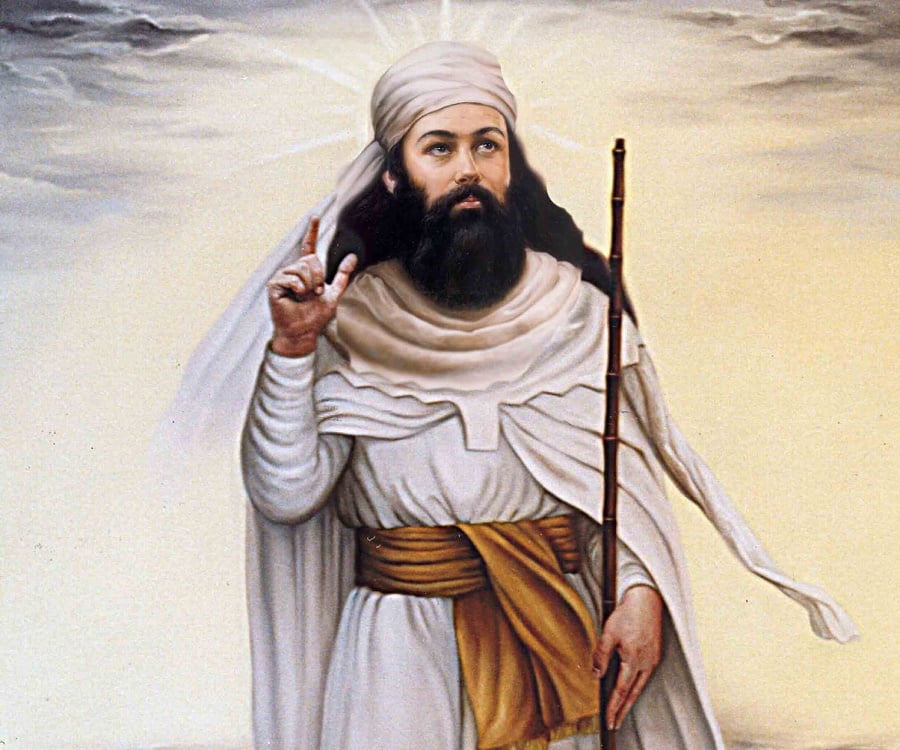
In the vast tapestry of religious thought, few threads are as interwoven and rich as those of Zoroastrianism and the teachings of Isaiah, viewed through the lens of the Bahá’í Faith. The Bahá’í perspective not only honors these ancient prophets but also reflects a unique interfaith dialogue that resonates through the ages. This exploration seeks to illuminate the teachings of Zoroaster and Isaiah, their profound interconnectedness, and their relevance in the contemporary Bahá’í discourse.
At the heart of Bahá’í teachings is a concept known as “progressive revelation.” This principle asserts that divine guidance is dispensed through a series of manifestations or prophets, each contributing to humanity’s spiritual evolution. Zoroaster, an ancient Persian prophet, and Isaiah, the revered Hebrew prophet, occupy significant positions on this continuum of revelation, each heralding messages that transcend cultural constraints.
The Essence of Zoroastrian Teachings
Zoroaster, with his revolutionary proclamation of dualism, introduced the concepts of Ahura Mazda (the Wise Lord) and Angra Mainyu (the Destructive Spirit). This dualistic framework serves as an allegorical representation of the perpetual struggle between good and evil. Zoroastrianism emphasizes moral choice, urging followers to choose the path of righteousness, encapsulated in the maxim: “Good Thoughts, Good Words, Good Deeds.” These values resonate deeply within the Bahá’í Faith, reflecting a shared emphasis on ethical living and personal responsibility.
Moreover, Zoroaster’s vision extended to societal well-being, advocating for justice, truth, and the sanctity of life. This alignment with Bahá’í principles is palpable; both emphasize unity and the importance of fostering an equitable world. The notion of “communal well-being” as proposed by Zoroaster is echoed in Bahá’í teachings on the oneness of humanity, stressing that individual growth is inextricably linked to collective development.
Isaiah’s Prophetic Legacy
Isaiah, whose prophetic voice resonated during tumultuous times in ancient Israel, espoused themes of social justice, righteousness, and the hope of a future Messianic age. His call for repentance and a return to God illustrates a profound concern for moral integrity and spiritual renewal. Isaiah’s imagery of “swords being turned into plowshares” serves as a powerful metaphor for peace and reconciliation, a notion that finds fertile ground within Bahá’í teachings advocating for global harmony.
In Isaiah’s oracle-like proclamations, one discerns a vision not merely restricted to his immediate context but extending to a universal application—a clarion call for all of humanity. The Bahá’í Faith embraces this universalism, positing that each of God’s manifestations delivers messages pertinent not solely to their individual communities but for all humankind. Isaiah’s visionary fervor thereby aligns seamlessly with the Bahá’í belief in unity and the interconnectedness of all prophetic legacies.
A Convergence of Teachings
The confluence of Zoroastrian and Isaiah’s teachings underscores vital tenets that permeate the fabric of Bahá’í thought. The convergence is not merely coincidental; it illuminates a profound intertextual relationship. Both prophets address the dichotomy of good and evil, embodying ethical paradigms that challenge followers to reflect on their spiritual journeys. Their teachings implore individuals to navigate the moral labyrinth with discernment and integrity.
The Bahá’í perspective encourages adherents to regard these teachings as a continuum of divine wisdom. Indeed, Zoroaster and Isaiah serve as eloquent spokesmen for the eternal truths of love, compassion, justice, and unity—principles that stand resilient against the vicissitudes of time and culture. The Bahá’í Faith thus reveres these figures not only as historical entities but as vital threads linking a larger narrative of divine guidance.
The Urgency of Interfaith Dialogue
In an age characterized by polarization and discord, the dialogue enveloping Zoroastrianism, Isaiah’s teachings, and the Bahá’í Faith emerges as a beacon of hope. This dialogue underscores the universal quest for truth, urging contemporary society to adopt an inclusive approach when engaging with diverse religious narratives. The Bahá’í ethos champions the idea that in understanding our shared human heritage, we can foster an environment of mutual respect and learning.
The Bahá’í teachings advocate for constructive engagement, encouraging individuals to embrace the virtues inherent in differing belief systems. This approach is not merely a theological endeavor; it represents a commitment to addressing societal challenges through collaborative efforts rooted in shared moral principles. The voices of Zoroaster and Isaiah resonate within this framework, highlighting the necessity for love and understanding as the antidotes to conflict.
Conclusion: A Tapestry of Wisdom
The intricate dialogue that binds the teachings of Zoroaster and Isaiah serves as a timeless testament to humanity’s spiritual evolution. As followers of the Bahá’í Faith delve into this rich historical context, they find an abundance of wisdom that transcends individual narratives. The teachings resonate with profound metaphors urging ethical living, social justice, and a commitment to the greater good—principles that seek to unite rather than divide.
In this expansive discourse, we are reminded that the path of spirituality is multi-faceted, shaped by the myriad expressions of divine guidance throughout history. Engaging with Zoroaster and Isaiah enriches the Bahá’í understanding of humanity’s collective spiritual journey. As we navigate the complexities of our world, may we draw inspiration from these ancient prophets, weaving their teachings into the fabric of our contemporary quest for unity and peace.