
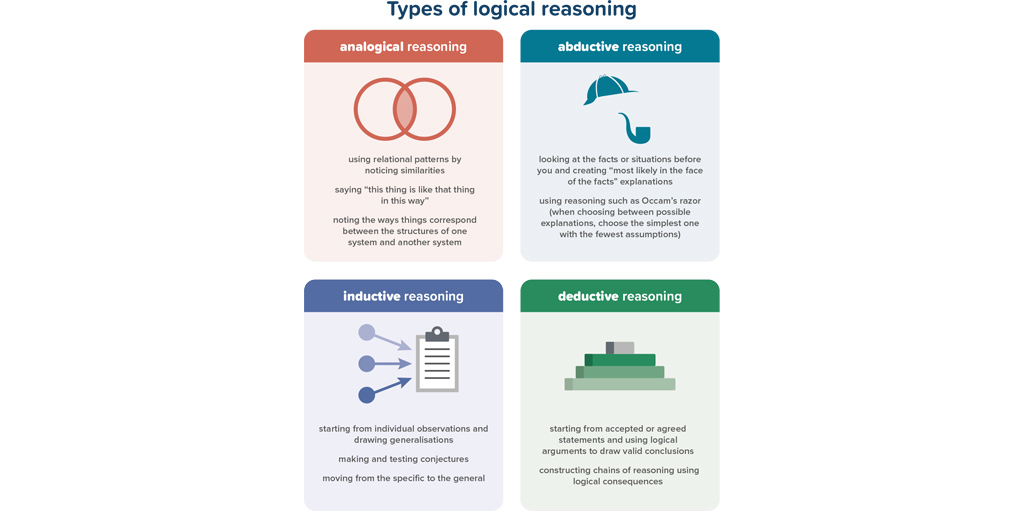
The exploration of the Bahá’í Faith intertwines profoundly with the philosophical tenets of logic, reason, and faith, often culminating in a discourse resembling the historical theological debates of the Trinity. This dialogue, while not explicitly centered on traditional Christian doctrines, invokes an evaluation of the interplay among rational thought, belief systems, and spiritual understanding within the Bahá’í framework. This article meticulously dissects these themes, shedding light on the nuances that characterize the Bahá’í relationship with logic, reason, and faith.
The Bahá’í Faith posits that human beings are endowed with the capacity for independent investigation of truth. This principle lays the groundwork for the pursuit of knowledge and the application of reason. It encourages adherents to utilize logic as a vital means of discerning truth amidst a plethora of ideas and beliefs. The notion of independent investigation is critical in the Bahá’í Faith, as it empowers individuals to engage in a personal and rational exploration of spiritual matters rather than relying solely on the doctrines or interpretations of religious authorities.
At the core of Bahá’í teachings is the idea that religion is not a set of unchanging dogmas but rather a dynamic process that evolves over time, reflecting the growth of human understanding. This is akin to the philosophical perspective that reason must be applied to ascertain the validity of beliefs—a notion that resonates with the re-evaluation of faith in the context of contemporary challenges and ideas. In examining the text of Bahá’u’lláh, the founder of the Bahá’í Faith, there exists a profound call for the application of reason when engaging with spiritual concepts. This acknowledgment leads to a vital consideration: how does reason coexist with the subjective nature of faith?
Faith, within the Bahá’í context, is not portrayed as mere blind adherence to beliefs. Instead, it reflects an energetic response to divine guidance, a conscious selection of belief grounded in the recognition of truth. This understanding of faith does not preclude skepticism or inquiry; rather, it invites a critical engagement with ideas while acknowledging their potential spiritual significance. By fostering a relationship between logical reasoning and spiritual belief, the Bahá’í Faith seeks to create a harmonious synthesis that transcends contradiction, thereby allowing adherents to uphold their ideals with both conviction and clarity.
In addressing the complications often arising from theological discussions, especially surrounding concepts like the Trinity, it becomes evident that Bahá’í teachings proffer unique insights. The traditional conception of the Trinity—as three distinct persons in one essence—has precipitated voluminous debates throughout religious history. The Bahá’í perspective introduces an alternative elucidation that emphasizes the unity of God and the unitive purpose of His manifestations. Rather than a division of divine essence, Bahá’ís regard different religious figures as reflecting various attributes of the same underlying reality, promoting a holistic understanding of spirituality. This perspective aligns with the Bahá’í principle of the oneness of humanity, transcending sectarian divides while encouraging mutual respect and cooperative engagement among diverse faith traditions.
Engaging with these concepts invites readers to reflect on the implications of reason and faith as they navigate their own spiritual journeys. The Bahá’í Faith’s emphasis on active participation in learning underscores the importance of continuous intellectual inquiry. Through this lens, various avenues of content emerge: academic writings exploring the interrelation of faith and logic; essays addressing the aspects of ethical implications philosophy brings to spiritual practice; and discussions that weave together personal narratives illustrating the transformative power of integrating reason with belief.
The expansive nature of Bahá’í teachings also implies a profound interconnectivity of all religions. This interconnectedness, stemming from a shared commitment to truth, fosters deep dialogue wherein the distinctions among various religious interpretations can be discussed without dismissiveness. Such discourse not only enriches understanding but also reinforces the notion that reason and faith can coexist and collaborate in the quest for ultimate truth.
Moreover, readers can anticipate engaging with a repository of teachings that elucidate how logical reasoning complements spiritual development. For instance, the Bahá’í teachings on the significance of consultation—the collective discussion among individuals to arrive at decisions—underscore the value of diverse viewpoints while employing reason as a guiding force in communal matters. This not only exemplifies applied logic within a spiritual context but also has practical implications for governance and social justice initiatives attributed to Bahá’í communities.
In summary, the Bahá’í Faith presents an intricate tapestry of logic, reason, and faith that possesses the inherent capacity to challenge and transform traditional notions of spirituality. The dialogue surrounding the Trinity Wars offers a poignant backdrop against which these interactions can be further understood, promoting an enriched perspective on the utility and importance of reasoned thought within faith practice. By embracing the interdependence of these elements, individuals are encouraged to engage thoughtfully with their spiritual beliefs, fostering a robust exploration of truth that is both rational and enlightening.
In navigating this profound landscape, which embraces both intellectual rigor and heartfelt spirituality, the Bahá’í teachings not only advocate for the elevation of personal understanding but also call for a broader, more inclusive approach to community and global engagement. Ultimately, readers can expect a comprehensive examination of the delicate equilibrium between logic, reason, and faith, redefining the parameters of spiritual discourse in an ever-evolving world.