
The Bahá’í teachings encompass a profound framework for understanding the oneness of humanity—a principle that serves as the cornerstone of their faith. The First Race Unity Symposium, held in 2015, stands as a testament to this ideal, marking a significant milestone in the Bahá’í efforts to cultivate racial harmony through dialogue, understanding, and collective action. This gathering exemplified the synthesis of diverse perspectives, converging on the urgent need to address issues of race and unity within our global society.
At its core, the symposium resonated with the Bahá’í belief that humanity is akin to a vast garden—a tapestry woven from countless threads of different hues and textures. Each individual, irrespective of race, ethnicity, or background, contributes uniquely to this expansive canvas. The gathering was not merely an event; it represented a clarion call for unity amidst growing societal discord and fragmentation.
The inaugural Race Unity Symposium delved deeply into the Bahá’í teachings, illuminating the doctrine of the oneness of humanity. This doctrine posits that the divisions borne from race are artificial constructs, mere shadows cast by ignorance and prejudice. The symposium became a sanctuary, a space where participants could engage in transformative conversations, removing the veil of misconceptions that often obscures mutual understanding.
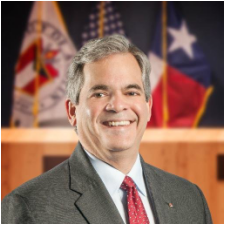
Among the speakers at this groundbreaking event was an eminent figure whose lived experiences embodied the values celebrated by the Bahá’í community. Their narrative provided a poignant illustration of how personal stories can bridge the chasms that separate us. The power of personal testimony served not only as a means of education but also as a catalyst for empathy, demonstrating that when individuals share their truths, they cultivate connections that transcend superficial differences.
The symposium also employed various artistic expressions as tools for communication and reflection. Music, poetry, and visual art became vessels through which attendees could explore and convey their feelings about race and unity. Through these mediums, participants were invited to reflect on their own identities and the societal structures that shape them. The use of art as a healing modality further underscored the Bahá’í assertion that culture plays a vital role in fostering harmony and appreciation among diverse groups.
As discussions unfolded, it became increasingly evident that introspection was as important as dialogue. Workshops facilitated by skilled practitioners guided participants through the intricate landscape of racial identity, privilege, and systemic inequities. These sessions were designed to engender not only intellect-based understanding but emotionally resonant connections. Through guided exercises, attendees were encouraged to grapple with their own biases, ignite inquiry, and transform discomfort into avenues for growth.
The Bahá’í teachings implore humanity to recognize that the eradication of prejudice—whether racial, religious, or social—is essential for achieving spiritual and material prosperity. The symposium’s proactive agenda explored practical solutions to these age-old struggles, emphasizing community action and collaboration. From local initiatives aimed at fostering dialogue to global campaigns advocating for civil rights, participants left equipped with both the inspiration and tools necessary to effect change within their own spheres of influence.
A significant theme that permeated the symposium is the idea of collective responsibility. The Bahá’í faith teaches that individuals must not merely observe the world’s injustices but actively engage in rectifying them. This collective ethos was epitomized by participants who pledged to implement action steps within their communities, catalyzing a movement toward enhanced understanding and collaborative interactions among diverse populations.
The narrative of the First Race Unity Symposium unfolds as a tale of courage, unity, and hope. When individuals come together, inspired by a shared vision of a just and equitable world, they harness collective power—an alchemy that transcends the constraints of time and space. This meeting of minds and hearts saw attendees leave with fortified spirits, emboldened by the knowledge that they are part of a larger mosaic of humanity striving for a singular purpose: the triumph of unity over division.
As the symposium reached its conclusion, the spirit of oneness lingered in the air, reverberating like the chords of a harmonious symphony. Each participant emerged as a note in this grand composition, eager to contribute melodiously to the ongoing symphony of race unity. The fundamental principle of the oneness of mankind—the beauty of diversity coalescing into singularity—was not simply discussed; it was felt and lived throughout the gathering.
In retrospect, the First Race Unity Symposium was more than a converging of minds; it was a reinvigorating of spirits—a multifaceted exploration into humanity’s capacity for compassion and transformation. The event etched its mark on the attendees, serving as a poignant reminder that the journey towards unity is ongoing, requiring diligence and perseverance. As the Bahá’í community continues to advocate for racial harmony, the reaffirmation of a shared identity as part of a global family will enable us to rise above our differences, forging pathways toward understanding and mutual respect. The symposium remains a beacon of hope, urging us toward the realization of the dream of a united human race.
