
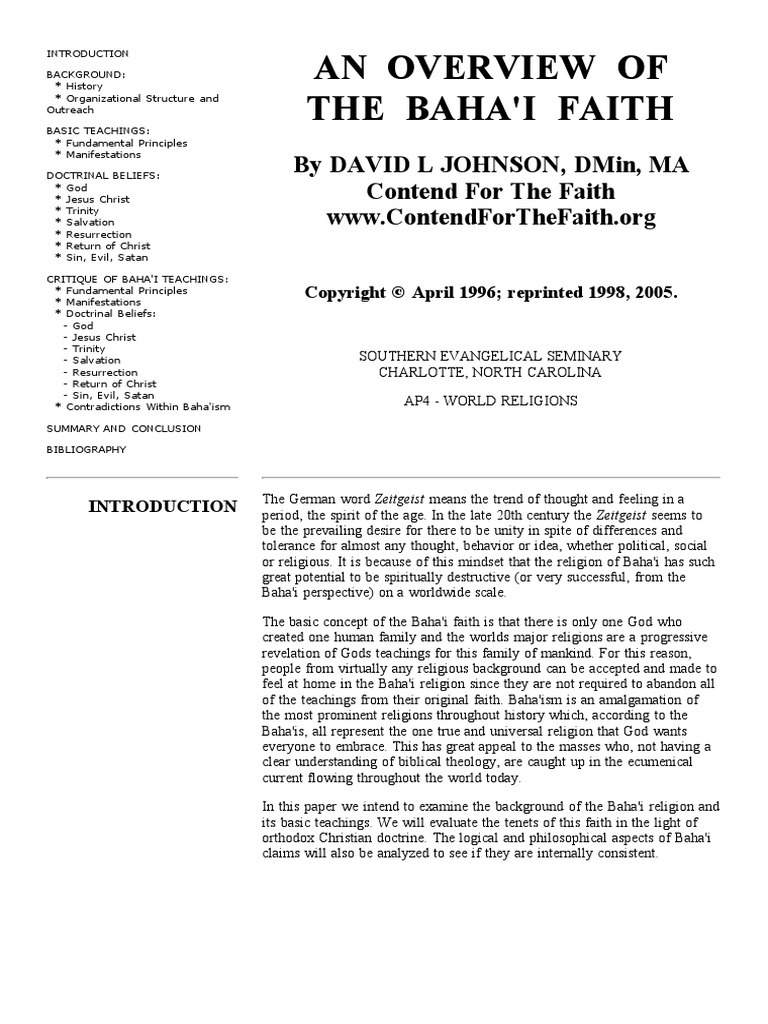
The Baha’i Faith, emerging in the mid-19th century, represents one of the most significant new religious movements, embodying a synthesis of mysticism and progressive theology. At its core, the Baha’i teachings espouse a vision of unity and divine revelation that transcends temporal and geographical boundaries. Understanding the mystical origins of the Baha’i Faith requires delving into its pertinent doctrines and concepts, tracing its lineage back to a variety of spiritual traditions, and illuminating its distinctive approach to understanding reality.
One of the crucial elements of the Baha’i Faith is its assertion that God, the Absolute Reality, is unfathomable and transcendent. Baha’is believe that humanity is incapable of grasping the full essence of the Divine. Instead, God has chosen to manifest His will through various prophets and divine messengers throughout history, such as Moses, Jesus, Muhammad, and most recently, Baha’u’llah, the founder of the Baha’i Faith. This concept of progressive revelation suggests a continuum of religious truth, where each messenger brings forth teachings suitable for the time and culture in which they appear, thereby laying the groundwork for spiritual evolution.
From a mystical standpoint, Baha’u’llah’s writings emphasize the indelible connection between the divine and the human. He conveyed the notion that every individual possesses a spark of divinity within, urging the faithful to cultivate their inner virtues and abilities. This spiritual awakening is integral to the Baha’i life, where personal transformation leads to collective betterment. The mysticism embedded within these teachings often finds resonance with various philosophical traditions such as Sufism, Kabbalah, and Christian mysticism, all of which explore the relationship between the soul and the cosmos.
The concept of the oneness of humanity stands central to Baha’i thought. This theological assertion posits that all human beings, irrespective of their diverse backgrounds, share a common spiritual heritage. As such, the Baha’i Faith categorically rejects any form of discrimination, whether based on race, class, or creed. The recognition of humanity’s collective identity lends a profound moral imperative to Baha’is, urging them to strive for global harmony and peace. This unity extends beyond mere tolerance—it is a call to develop enduring relationships that foster mutual understanding and respect among diverse communities.
The Baha’i teachings also encapsulate the idea of the harmony of science and religion. Embodying a scientific spirit, Baha’u’llah taught that true knowledge must be aligned with spiritual principles. This perspective not only provides a platform for interfaith dialogue but also emphasizes the need for scientific inquiry in understanding the universe. The Baha’i belief that religion should be the source of consolation and not conflict aligns with the mystical understanding that the search for truth is inherently divine.
Another compelling aspect of the Baha’i Faith lies in its approach to the purpose of life. Baha’is are encouraged to recognize life as a transient opportunity for spiritual advancement. This viewpoint underscores the significance of moral conduct, character development, and an unwavering commitment to service. Through the lens of Baha’i teachings, the pursuit of personal and collective growth is seen as an expression of one’s innate divinity. The concepts of service and sacrifice form the bedrock of an harmonious existence, with the understanding that contributing to the welfare of others paves the way toward collective enlightenment.
Furthermore, ritual and practice within the Baha’i community serve as conduits for transcending the mundane and experiencing the divine. The daily prayers, devotional gatherings, and the Nineteen Day Feast illustrate a blend of communal and private spirituality. These practices provide structure and a sense of belonging to adherents, reinforcing the community’s commitment to fostering spirituality in both individual and social contexts. The integration of prayer, meditation, and reflection cultivates an atmosphere conducive to personal revelations and mystical experiences, allowing individuals to deepen their connection with the Divine.
Baha’i teachings on the afterlife also reveal profound mystical insights into existence and continuity. Baha’is hold that the human soul embarks on an eternal journey, progressing through various realms of existence after physical death. This belief engenders a sense of purpose in life, directing believers to prioritize their spiritual development rather than ephemeral pursuits. The afterlife is not merely an escape from the temporal world; it is a continuum of growth and enlightenment, further reinforcing the notion of life as an opportunity to cultivate virtue and wisdom.
In understanding the Baha’i Mystical origins, it becomes evident that the Faith is a robust tapestry woven with threads of love, unity, and service. Each teaching presents a holistic view of existence, inviting individuals to engage not just intellectually, but also spiritually. This synthesis of teachings elucidates a pathway toward enlightenment, fostering a deep engagement with both the Divine and humanity.
Ultimately, the Baha’i Faith offers an expansive worldview that harmonizes spiritual truths with the practical realities of daily life. By embracing the mystical dimensions of its teachings, followers are called to embark on a journey toward personal transformation, collective action, and the establishment of a just global society. Through this multifaceted lens, the Baha’i Faith emerges as a beacon of hope, illuminating the path toward unity, love, and the fulfillment of humanity’s collective destiny.