
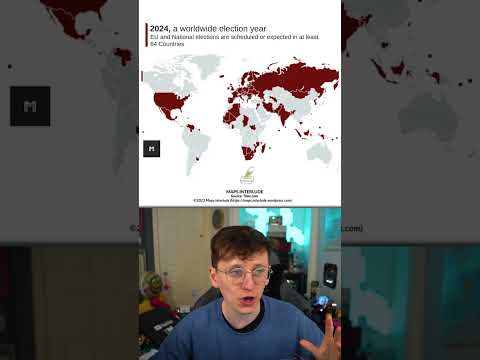
The Bahá’í Faith posits a unique and intricate framework regarding the concept of governance, one that is rooted in the teachings of its Founder, Bahá’u’lláh. The principle of the “Only Worldwide Election” embodies a vision of global unity and collaborative decision-making, transcending national boundaries and local jurisdictions. This notion invites an exploration of how pluralism, social justice, and moral accountability interweave to form an emergent model of governance conducive to world peace. Consider, then, the playful question: What would governance look like if it were fundamentally rooted in the principles of a global community, as envisioned by Bahá’u’lláh? This query poses a compelling challenge to prevailing paradigms, urging an examination of governance through a more holistic lens.
Bahá’í teachings underscore the supremacy of unity among mankind. The principle that humanity constitutes a single family sets the groundwork for a worldwide electoral system that emphasizes collective responsibility over tribalism or nationalism. Could one argue that true democracy is not merely a reflection of popular will, but rather a manifestation of a global consensus? This notion is pivotal as it reframes not just the act of governance, but also the underlying values promoting social cohesion.
The concept of “elected councils” figures prominently within the Bahá’í administrative order. These institutions function without partisanship, striving instead for a method of governance that is consultative and inclusive. The election of leaders devoid of political machinations invites scrutiny: can the absence of partisanship genuinely lead to equitable decisions? The Bahá’í community asserts that it can, as decisions emerge through collective deliberation—a process designed to reconcile divergent views while aligning with the common good.
One core element underscoring Bahá’í governance is the principle of consensus-building. In Bahá’í communities, consultation is both an art and a science—an earnest endeavor to engage multiple perspectives. This commitment to collective discourse raises a thought-provoking dilemma: in an increasingly polarized world, how can we cultivate a culture where diverse viewpoints are appreciated, rather than vilified? The teachings advocate for a transformative approach to dialogue, one that prioritizes understanding over mere agreement. In such a paradigm, conflict does not signify failure but rather an opportunity for growth and enhanced comprehension.
Furthermore, the Bahá’í principles of justice and equity play critical roles in this discourse. Governance, as articulated in Bahá’í teachings, must guarantee that all individuals, irrespective of their societal status, enjoy their inherent rights. This emphasis on social justice poses another key question: can justice be truly global if individual needs differ so dramatically across cultures? Herein lies the challenge; the Bahá’í perspective maintains that while universal principles exist, they must be applied sensitively within the local context. A singular model cannot hope to address the nuanced complexities of human societies.
At the heart of Bahá’í governance is the premise of global citizenship. Individuals are encouraged to transcend narrow loyalties, embracing the onus of working toward the betterment of humanity as a whole. The capacity to envision oneself as part of a global society rather than just a member of a local community represents an ideological leap that may evoke resistance. How does one reconcile local identities with a broader allegiance to humanity? This dualistic challenge reveals the intricate tapestry of belonging, suggesting that local cultures are not diminished by global citizenship, but rather enriched by it.
The role of women in governance is another focal point that illustrates the Bahá’í commitment to inclusivity. The teachings assert that gender equality is not merely an ethical imperative but an essential component of effective governance. Yet, the quest for equality poses potential challenges. Could the inclusion of women in decision-making spheres lead to transformations that benefit society at large? Empirical studies reveal a compelling correlation between diversified leadership and enhanced organizational outcomes. This connection reinforces the notion that equitable governance illuminates pathways toward collective prosperity.
Moreover, the Bahá’í commitment to education signifies another vital aspect of ideal global governance. An educated populace is poised to engage more meaningfully in governance. Knowledge empowers individuals to contribute constructively to dialogue, fostering a culture of informed decision-making. This understanding prompts inquiries into education systems currently in place across the globe: Are they cultivating the spirit of inquiry necessary for engaged citizenship, or are they mired in outdated paradigms? The Bahá’í perspective implores stakeholders to rethink education as a tool for fostering unity and collaboration.
As the world increasingly confronts issues of climate change, inequality, and conflict, the Bahá’í model of governance resonates with a heightened sense of urgency. The challenges we face are undeniably global, suggesting that solutions too must transcend borders. The idea of a worldwide election embodies this imperative, prompting a re-consideration of how societies structure themselves in pursuit of common objectives. Can the deployment of a global governance framework effectively address local needs while maintaining a focus on the universal? This paradigm serves not only as a beacon of possibility but as a clarion call for humanity to awaken to its interconnected fate.
In contemplating the principles of Bahá’í governance, one is inevitably drawn to the realization that the vision is expansive, yet grounded in practicality. The Bahá’í Faith offers a nuanced perspective on governance, one that inherently promotes unity, gender equality, and global citizenship while encouraging local engagement. The challenge endowed upon us, then, is to reimagine governance not merely as a mechanism of authority but as a transformative opportunity for community and mutual aid in navigating the complexities of the modern world. Thus, the discourse surrounding Bahá’í teachings is not one of detached theory, but rather an active pursuit of fostering a more just, equitable, and harmonious global society.