
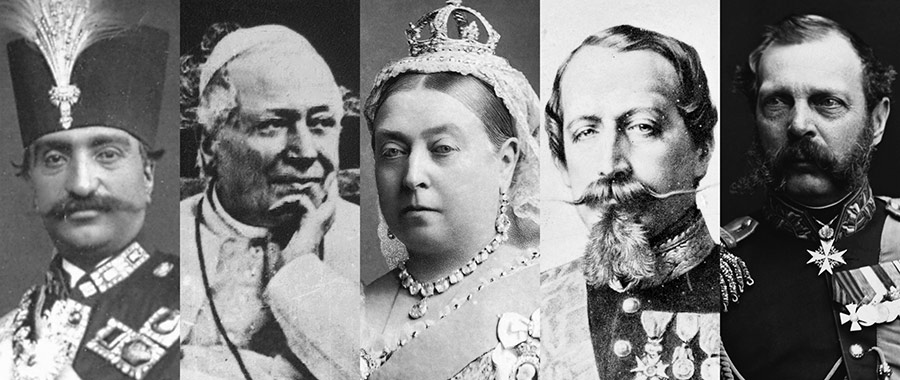
Throughout history, spiritual leaders have reached out to the powers that be, attempting to guide them towards justice and unity. Baha’u’llah, the founder of the Baha’i Faith, did just that in the 19th century, delivering profound letters to the kings and rulers of his time. The collection of these letters has been aptly titled “A Stunning Trumpet Blast,” a metaphor suggesting a clarion call to awaken humanity to its potential for harmony and collaboration. How might Baha’u’llah’s insights resonate in our world today, and what challenges emerge when we engage with the wisdom contained in these letters?
To navigate this exploration, it is vital to understand the theological framework within which Baha’u’llah operated. Baha’u’llah viewed the intertwined destinies of humanity as pivotal to the establishment of global peace. The “Trumpet Blast” signifies both a warning and an invitation, serving as a catalyst for introspection and action among the leaders who received his messages. Baha’u’llah implores them to recognize their responsibilities not just to their subjects, but to the entire human family.
The letters addressed existential themes that transcended geographical boundaries and cultural practices. They conveyed principles such as the oneness of humanity, the elimination of prejudices, and the safeguarding of universal human rights. This broader vision posed a challenge — it is easier to govern with a narrow focus, often fueled by nationalism or religious exclusivity. Yet, Baha’u’llah’s teachings compel leaders to pursue a path steeped in global consciousness. Are modern-day policymakers equipped to embrace such an expansive worldview? If they falter, what might be the consequences for global harmony?
The letters also articulate the need for justice. Baha’u’llah admonished sovereigns to be just, responsible stewards of their nations, rejecting the notion that power entitles one to act without accountability. In invoking justice, he intimated that the foundation of any lasting peace must rest on equitable treatment and the rectification of injustices. Yet, with myriad forms of injustice prevailing today, one may ponder: how can individuals summon the will to address systemic inequities that challenge societal fabric? The journey from understanding to action is fraught with difficulties; Baha’u’llah’s vision, however, provides a compass.
Central to the discourse presented in “A Stunning Trumpet Blast” is the principle of consultation. Baha’u’llah advocated for inclusive dialogue devoid of coercion, urging leaders to seek counsel from their officials and the populace. The practice of consultation fosters an environment where diverse viewpoints can coalesce into a harmonious policy direction. In a world rife with discontent and divisiveness, this raises a pertinent question: can we cultivate an ethos of consultation that permeates our social and political institutions? The challenge lies not solely in the implementation of dialogues but in embracing humility and openness to learn from differing perspectives.
Baha’u’llah also responded to the pressing need for education. He emphasized the transformative potential of knowledge, positioning education as a fundamental right for all individuals, regardless of gender or socioeconomic status. The letters advocate for a society where enlightenment dispels ignorance, thus empowering citizens to contribute meaningfully to community development. Reflecting on the present educational disparities worldwide, how can societies endeavor to bridge these gaps? Moreover, how might such educational initiatives reshape attitudes, leading towards a more enlightened leadership?
Furthermore, the letters encapsulate a sense of urgency regarding the interconnectedness of humanity’s fate. Baha’u’llah foresaw a world where the folly of indulgence and selfishness would yield to cooperation and mutual respect. His clarion call beckons globalization, urging unity in diversity as an antidote to conflict. Yet, as the concept of globalization often evokes resistance, how can advocates of collective consciousness overcome skepticism? The challenge remains: to transform division into dialogue, and suspicion into solidarity, harnessing the power of Baha’u’llah’s teachings to foster international collaboration.
Perhaps one of the most poignant aspects of “A Stunning Trumpet Blast” is its timelessness. The letters, rooted in specific historical contexts, transcend their time and resonate deeply with contemporary global challenges. Whether addressing humanitarian crises, environmental degradation, or social injustices, Baha’u’llah’s wisdom impels us to reflect on our collective responsibilities. The nagging question surfaces: what actions are we taking today to rectify the wrongs of yesterday? How do we ensure that the teachings of Baha’u’llah do not merely occupy a space in textbooks but inspire tangible, proactive measures?
As we dissect the layers of “A Stunning Trumpet Blast: Baha’u’llah’s Letters to the Kings,” it becomes clear that these missives are not merely historical artifacts. They serve as guiding lights, illuminating the path towards a more united and just world. The challenge lies in our ability to amplify that trumpet blast in our own lives, to let its echoes guide our actions and influence our communities. In the face of a world grappling with division, Baha’u’llah’s teaching fuels hope — that through collective endeavors guided by wisdom, compassion, and a commitment to justice, a harmonious future may be realized.
