
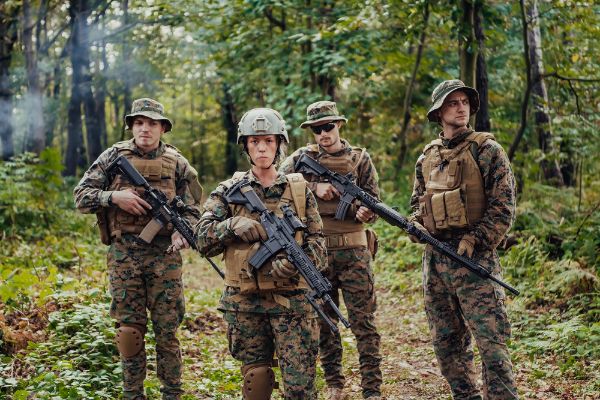
In the unfolding tapestry of contemporary discourse, the question of whether women should be included in the military draft in the United States looms large. It stands as a litmus test for the evolving perceptions of gender roles within society. The Bahá’í teachings, which eloquently emphasize equality, unity, and justice, offer a profound framework for examining this pivotal issue. At the intersection of historical precedent and future aspirations, the Bahá’í perspective can illuminate the path toward a more equitable resolution.
To begin, it is essential to recognize that the Bahá’í Faith places profound emphasis on the equality of men and women. This principle is not merely a lofty ideal but rather a foundational tenet that holds the potential to redefine societal norms. In a world where the echoes of patriarchal structures still persist, the call for gender equality serves as a clarion call, urging humanity to transcend limitation and embrace collective progress. The proposal to draft women encapsulates this opportunity: the chance to dismantle outdated barriers and acknowledge women as integral partners in the realm of societal service and responsibility.
The historical context surrounding military conscription is pivotal in shaping modern discussions. Traditionally, the draft has been viewed through a predominantly masculine lens. Yet, as society evolves, so too must its definitions and practices. The inclusion of women within the draft is emblematic of a broader recognition of women’s capabilities beyond traditional roles. By invoking Bahá’í principles, one can discern that true justice necessitates recognizing the contributions of all individuals, irrespective of gender. The tapestry of service is woven from diverse threads; each thread—whether male or female—enhances the fabric of society.
Moreover, the Bahá’í teachings advocate for the participatory involvement of all segments of society in decision-making processes. The concept of consultation, deeply enshrined in Bahá’í practices, underscores the importance of collective dialogue. If the question of drafting women is to be addressed, it should invoke the voices of women themselves, who possess unique insights into the implications of such a policy. The proverbial tapestry must reflect not only the hues of men but should equally incorporate the vibrant colors of women’s experiences and perspectives. This consultative approach can foster a more inclusive environment, enriching the discourse surrounding the draft.
Engaging women in the military draft also serves as a powerful statement about their agency. It articulates a profound acknowledgment that women are not merely passive subjects of societal structures but active agents capable of wielding both influence and responsibility. The Bahá’í Faith emphasizes the empowerment of individuals to contribute to the common good. Thus, granting women the opportunity to serve in the military, should they choose, signifies an elevation of their status and recognition of their rights as full citizens.
However, the topic is fraught with multifaceted implications, as the consequences extend beyond individual agency. The inclusion of women in the draft raises questions about the nature of warfare and the ethical considerations surrounding military engagement. Bahá’í teachings advocate for peace and the resolution of conflicts through dialogue rather than violence. This fundamental principle invites us to reflect on the very notion of military service itself and its alignment with the teachings of unity and peace. Are we, as a society, prepared to confront the implications of conscription in a world where the emphasis should be on fostering international harmony?
Furthermore, the enigmatic relationship between gender and combat complicates the discussion. Traditional military roles have historically emphasized physical prowess and combat readiness. Yet, contemporary warfare has evolved, demanding diverse skill sets that transcend these traditional metrics. Women, endowed with attributes such as empathy, strategic thinking, and collaboration, have proven to be invaluable assets in various fields, including conflict resolution and peacekeeping. The Bahá’í perspective encourages us to transcend archaic notions of gender both in and outside the military, envisioning a world where every individual’s strengths contribute to the greater good.
Additionally, the ever-present specter of societal norms and public sentiment plays a crucial role in shaping policies related to the draft. Public opinion surrounding women’s roles in the military can be polarized, often influenced by cultural paradigms and historical precedents. The Bahá’í teachings invite a reevaluation of these prevailing narratives, challenging societal assumptions that restrict women’s roles. It encourages citizens to reimagine the narrative of strength and resilience, presenting a vision wherein women can shoulder responsibilities alongside men without compromising what it means to be feminine or masculine.
As the United States stands on the precipice of making critical decisions regarding military conscription, it must grapple with the weight of these historical and philosophical considerations. Bahá’í teachings illuminate the path forward, advocating for deliberation rooted in equality, justice, and the empowerment of all individuals. The question of whether women should be drafted is not merely a matter of policy; it embodies a critical juncture in the journey toward gender equality.
In conclusion, as the discourse unfolds, the implication of drafting women resonates deeply within the Bahá’í perspective of unity and equality. This vital question does not reside in a vacuum; rather, it is an opportunity to reflect on historical norms, challenge societal constructs, and redefine the roles of men and women in service to their country. Through the lens of Bahá’í teachings, the exploration of this topic becomes an invitation for profound societal transformation, compelling humanity to embrace a future where equity guides the paths individuals traverse, both in times of peace and conflict.
