
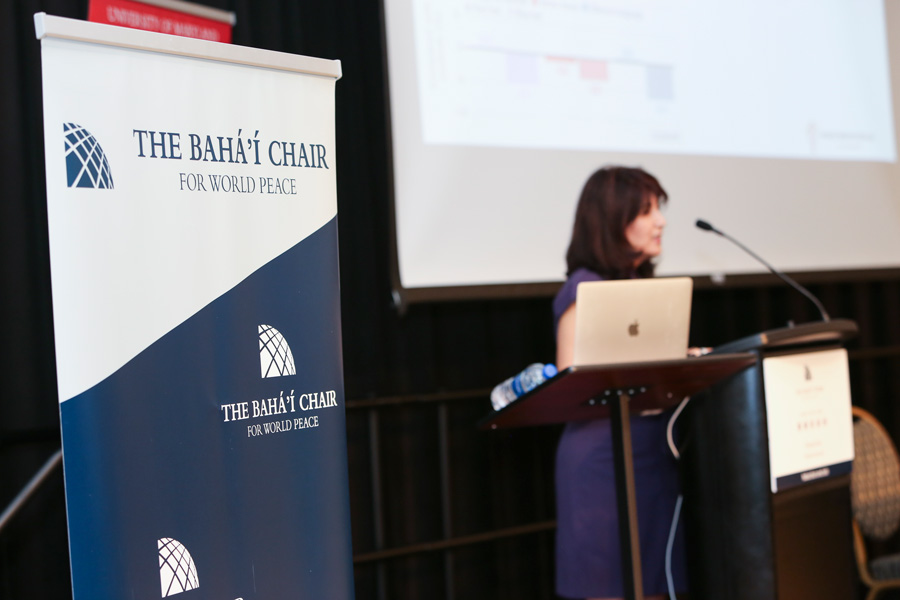
In an era fraught with global tensions and conflicts, the Baha’i teachings offer a beacon of hope and a framework for constructing pathways to peace. Central to this paradigm is the Baha’i Chair for World Peace, established as an academic initiative that brings together leading specialists from diverse fields. This convergence of expertise aims not only to analyze the multifaceted challenges confronting humanity but also to proffer innovative, collaborative solutions that aspire to foster global tranquility.
The Baha’i commitment to world peace emerges from its foundational belief in the oneness of humanity—an assertion that transcends national, ethnic, and religious divides. At the heart of this doctrine lies the conviction that universal peace is not merely a lofty ideal but an attainable reality contingent on collective action and enlightened thinking. The Baha’i Chair for World Peace personifies this vision, establishing an intellectual crucible where thought leaders wrestle with the questions that underpin enduring conflict.
One of the foremost objectives of the chair is the promotion of interdisciplinary dialogue. This initiative acknowledges that the complexities of global peace cannot be understood through a singular lens. Instead, it fosters an environment conducive to interdisciplinary discourse, uniting scholars from areas such as political science, sociology, international relations, psychology, and conflict resolution. Each of these disciplines offers unique insights, and their intersection may yield comprehensive strategies that address the root causes of violence and discord.
Moreover, the Baha’i Chair emphasizes the imperative of incorporating diverse cultural perspectives into the dialogue surrounding peacebuilding. Specialists from various geographies and traditions bring their own values, experiences, and paradigms to discussions, enriching the collective understanding of what constitutes peace in different contexts. This pluralistic approach not only broadens the dialogue but also cultivates empathy—an essential quality for effective communication and cooperative action across cultural divides.
Critical to this discourse is the recognition of systemic injustices that perpetuate conflict. The Baha’i teachings advocate for the eradication of prejudice, whether it be based on race, gender, or socio-economic class. The Baha’i Chair’s mandate extends to examining how such biases manifest in societal structures and hinder efforts towards comprehensive peace. By focusing on dismantling these barriers, the initiative strives to establish equitable frameworks that empower marginalized communities and, consequently, advance the entire global populace.
Additionally, the chair aims to integrate ethical considerations into policymaking processes. The following sections elucidate how the Baha’i principles can be applied to contemporary issues, thus engendering a moral commitment to peace that transcends political expediency. This ethical dimension posits that genuine peace is inseparable from justice, underscoring the necessity of aligning both local and international policies with concepts of fairness and equity. Policymakers must contemplate not only the legality of decisions but also their moral ramifications on the global stage.
The Baha’i Chair also exemplifies the potential of education as a transformative tool. Education is perceived as a fundamental vehicle for fostering understanding, tolerance, and cooperation. Initiatives aimed at educating youth about the significance of global peace emphasize the cultivation of critical thinking and the skills necessary for peaceful conflict resolution. By instilling these values early on, future generations are empowered to contribute proactively to a culture of peace.
In proposing novel resolutions, the chair often emphasizes the necessity of incorporating technological advancements in the pursuit of peace. The digital age presents both challenges and opportunities; while technology can facilitate the spread of misinformation and exacerbate tensions, it also serves as a powerful medium for dialogue and collaboration. The Baha’i Chair explores innovative uses of technology, promoting platforms that encourage constructive communication among disparate groups and aid in the dissemination of peace-oriented narratives.
The model of collaboration is exemplified through the engagement of global institutions, non-governmental organizations, and civil society. The Baha’i teachings advocate for a unified approach to problem-solving; hence, the Baha’i Chair actively seeks partnerships that harness the strengths of various entities committed to peace promotion. By fostering partnerships, the chair amplifies its impact, coordinating efforts that serve to influence international policies and practices toward a more peaceful coexistence.
Furthermore, the Baha’i Chair underscores the importance of experiential learning. Through interactive workshops and simulations, participants engage in hands-on peacebuilding exercises that highlight the complexity of real-world conflicts. This immersive approach is designed to cultivate indispensable soft skills, such as negotiation, empathy, and cultural sensitivity, which are paramount in the art of diplomacy.
Conclusively, the Baha’i Chair for World Peace is not merely an academic entity; it embodies a holistic approach to engendering global peace grounded in the Baha’i teachings of unity, justice, and ethical responsibility. By assembling leading specialists and fostering interdisciplinary collaboration, the chair seeks to inspire a paradigm shift in how societies perceive and pursue peace. The initiative piques curiosity and invites engagement, challenging both individuals and institutions to reevaluate their roles in the collective journey toward a harmonious global society. As we reflect on the significance of these teachings and the ongoing efforts of the Baha’i Chair, we are reminded that the pursuit of peace is a shared responsibility, one that demands our collective dedication and innovative thinking.