
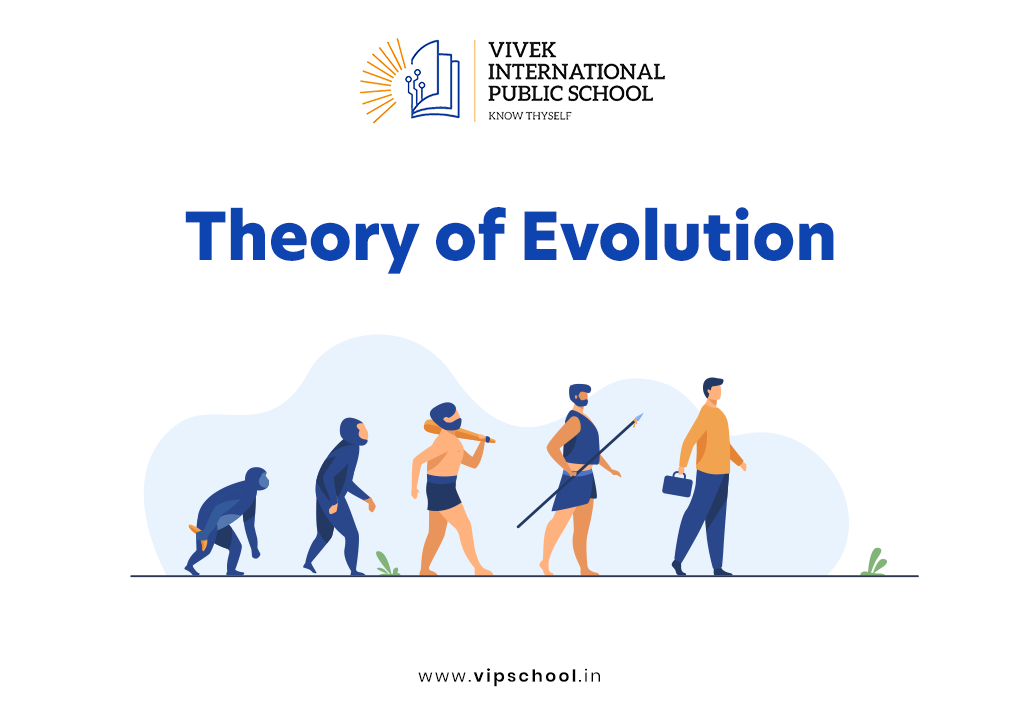
Throughout the ages, humankind has wrestled with profound inquiries concerning existence, purpose, and the nature of creation. Among these inquiries stands the question: Is evolution merely a biological phenomenon, or is it an intricate tapestry that encompasses philosophical, spiritual, and sociocultural dimensions? The Bahá’í Faith, a religion that emerged in the mid-19th century, proffers a unique perspective on this query, intertwining science with spirituality to advocate for an understanding of evolution that transcends simple biological mechanisms.
The Bahá’í teachings assert that evolution is not confined to the biological realm. Rather, it is a comprehensive principle that manifests in various forms throughout both the natural world and human society. The essence of evolution, according to Bahá’í beliefs, is the continuous unfolding of life, wherein every entity, from microscopic organisms to complex human societies, participates in a transformative journey towards higher states of existence.
One might ponder: If evolution is a multifaceted phenomenon, how do we reconcile scientific viewpoints with the spiritual insights offered by the Bahá’í teachings? This inquiry is not merely theoretical; it poses a tangible challenge that invites deeper contemplation. The evolution of the physical body is grounded in empirical evidence, yet, Bahá’í thought encourages an exploration of metaphysical evolution—our spiritual and intellectual development as individuals and communities.
The Bahá’í teachings maintain that while physical evolution is essential to biologically adapt to a changing environment, the advancement of the human soul is equally crucial. This duality highlights the notion that evolution is both a crown of creation in a materialistic sense and a profound spiritual journey. Bahá’ís believe that humanity’s purpose is to evolve both materially and spiritually, reflecting a synchronicity between body and spirit.
Delving into the narrative of creation, Bahá’í literature utilizes the concept of the “Greatest Name,” signifying the intrinsic relationship between God and humanity. According to these teachings, every stage of evolution is orchestrated by divine influence. The narrative acknowledges that evolution is directed towards a particular end—an ultimate unity among all people, transcending the limitations imposed by race, nationality, or creed. Thus, the Bahá’í outlook integrates an understanding of evolution with an inherent teleological perspective, suggesting that life itself is an unfolding process with a purpose.
The notion of evolutionary development expands beyond human societies to include the natural world. The Bahá’í teachings advocate for the concept of interdependence, elucidating that all forms of life exist within a vast interconnected ecosystem. This framework insists that every species, as well as the human community, contributes to a larger purpose, thus nurturing the fabric of creation itself. The degradation of this interconnectedness through environmental harm stands contrary to Bahá’í commitments which emphasize love and respect for the earth as vital components of spiritual evolution.
This spiritual and material interconnectedness poses questions regarding the ethical implications of our actions. As inhabitants of the planet endowed with cognitive abilities and moral responsibility, what role do we play in the ongoing process of evolution? The Bahá’í perspective postulates that our actions can facilitate or hinder the progression of society toward higher ideals of justice, equality, and unity. This call to moral consciousness reinforces the idea that human beings are both agents and beneficiaries of evolutionary change, and through our choices, we can hasten or stagnate the progress of civilization.
Moreover, the Bahá’í writings emphasize the significance of scientific endeavors in understanding the natural mechanisms of evolution. The pursuit of knowledge is celebrated as a form of worship in the Bahá’í Faith. This acknowledgment encourages a harmonious coexistence of faith and reason, suggesting that scientific exploration can lead to a deeper comprehension of the divine creation. Consequently, this synthesis of science and spirituality empowers individuals to appreciate the beauty in both the material and spiritual dimensions of evolution.
The Bahá’í Faith does not shy away from the complexities inherent in the concept of evolution. Questions surrounding the existence of suffering, the survival of the fittest, and human agency often challenge simplistic interpretations of evolutionary theory. The teachings, however, invite followers to view these challenges not as impediments but as opportunities for growth and understanding. Evolution, in this light, becomes a philosophical lens through which one can examine personal and collective journeys, highlighting resilience, adaptation, and an inexorable drive toward improvement.
In essence, Bahá’í teachings express that evolution is neither a threat to spirituality nor a disjointed attempt at explaining the complexities of life. It is instead a holistic paradigm that marries science with spirituality, urging individuals to recognize their dual roles as biological organisms and spiritual beings. By embracing this multifaceted nature of evolution, one can cultivate a more profound appreciation for the interconnectedness of all life forms and acknowledge a divine purpose woven into the very fabric of existence.
Ultimately, the challenge lies in how individuals choose to navigate the intricate dance between material and spiritual evolution. Each person is urged to introspectively examine their actions and contributions to the collective journey of humankind. The Bahá’í Faith, in its unique exposition of evolution, underscores the imperative of elevating both our understanding of the natural world and our spiritual capacities, thereby facilitating a more harmonious and enlightened existence.