
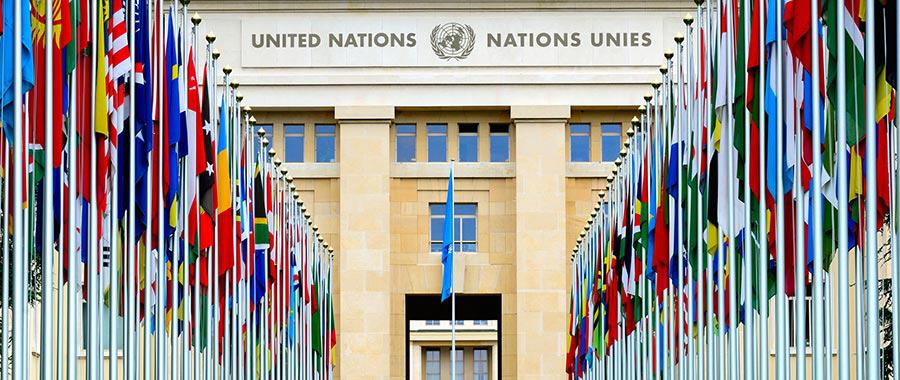
In a world increasingly characterized by its complexities and divisions, the observance of United Nations Day serves as a poignant reminder of the inherent principles enshrined within the Bahá’í teachings. This day, celebrated on October 24, marks the anniversary of the United Nations Charter’s inception in 1945, wherein nations unified their aspirations for peace, cooperation, and progress. The Bahá’í Faith, deeply rooted in the promotion of unity among all peoples, embodies the very spirit that the United Nations seeks to propagate. Through its teachings, it emphasizes the paramount importance of global concord and the pursuit of shared aspirations.
To begin with, the metaphor of a garden serves as a compelling representation of the Bahá’í ethos regarding diversity and unity. Just as a garden flourishes through its myriad of flowers, each distinct yet collectively beautiful, humanity thrives on the diversity of cultures, beliefs, and backgrounds. Bahá’ís hold that this diversity is not merely a tapestry of differences but rather the foundation upon which harmonious relationships can be cultivated. In celebrating United Nations Day, one acknowledges that the seeds of cooperation, understanding, and goodwill must be nurtured to foster a world where unity prevails over discord.
The teachings of Bahá’u’lláh, the founder of the Bahá’í Faith, underscore the necessity of global unity as a remedy to the strife that plagues society. He articulated that the oneness of humanity is a foundational principle, positing that distinctions based on race, class, nationality, and religion serve only to diminish the collective human experience. This discourse mirrors the UN’s mission, which is to bring nations together to work towards a common purpose—peace. Every October 24th, as we observe United Nations Day, we not only celebrate its achievements but also reflect on Bahá’í teachings that advocate a world where the bonds of brotherhood transcend artificial barriers.
Furthermore, the Bahá’í concept of “concord” invites us to delve deeper into the synergy required for international cooperation. Concord implies a harmonious blending of thoughts, actions, and ideals, where differences are not merely tolerated but celebrated. This aligns seamlessly with the United Nations’ vision of multilateral dialogues and collaborative solutions to global challenges such as climate change, poverty, and educational disenfranchisement. The unique appeal of the Bahá’í teachings lies in their call for an integrated approach to problem-solving—one that encourages nations and peoples to harness their collective strengths, channeling energies toward a shared destiny.
In examining the intricate relationship between the Bahá’í Faith and United Nations Day, it becomes evident that both entities extol the virtues of compassionate action. The Bahá’í approach is characterized by a deep commitment to service, echoing the UN’s ideal of serving humanity. This harmony between spiritual teachings and practical applications illuminates the path toward a more equitable world. As individuals resonate with the teachings, they are engendered to become active participants in their communities, contributing to initiatives that uplift others, thereby reinforcing the core tenets celebrated on this day.
Moreover, the notion of “global citizenship” finds a profound convergence within the Bahá’í framework. Each individual is envisaged as a vital contributor to the overarching tapestry of humanity. This perspective encourages a shift from the conventional paradigms of nationalism to a broader understanding of shared responsibilities. The United Nations, epitomizing global governance, resonates with this notion as it seeks to encompass all nations under a single umbrella of cooperation and camaraderie. Thus, on United Nations Day, we are reminded that the aspiration for global harmony is not merely an ideal, but a call to action that necessitates reliance on principles of justice, equity, and mutual respect.
The Bahá’í teachings also emphasize the significance of collaboration in governance, urging the establishment of a world federation. This concept entails not only an alliance of nations but the active engagement of its citizens in governance processes, ensuring that all voices are heard and valued. As citizens of the world, Bahá’ís advocate for democratic governance that aligns with the universal principles articulated by the UN. These concepts are not stagnant but rather dynamic and evolving, reflecting the necessity for innovative approaches to international diplomacy and decision-making in times of uncertainty.
As we contemplate the broader implications of United Nations Day through the Bahá’í lens, it is crucial to recognize the substantive role of education in fostering unity. The pursuit of knowledge is deemed sacred within the Bahá’í teachings. Educated individuals are better equipped to understand and appreciate the diversity of perspectives, empowering them to engage in meaningful dialogue and understanding. In this regard, educational initiatives resonate with the UN’s Sustainable Development Goals, particularly Goal 4, which advocates for inclusive and equitable quality education. The synergy between the two highlights a shared commitment to nurturing future leaders who are predisposed to champion unity and collaboration on a global scale.
In conclusion, as we commemorate United Nations Day, the Bahá’í teachings of unity and concord resonate powerfully. The metaphor of a garden serves to elucidate the beauty inherent in our differences, while the profound principles articulated by Bahá’u’lláh remind us of our interconnectedness. Together, the Bahá’í Faith and the United Nations exemplify the necessity of collective action, shared ideals, and compassionate governance. The journey toward global harmony is an ongoing process, requiring the commitment and contributions of every individual. United Nations Day stands not as a mere commemoration of past achievements, but as an inspiring call to action—one that implores us to transcend barriers and work collaboratively toward a brighter, unified future.
