
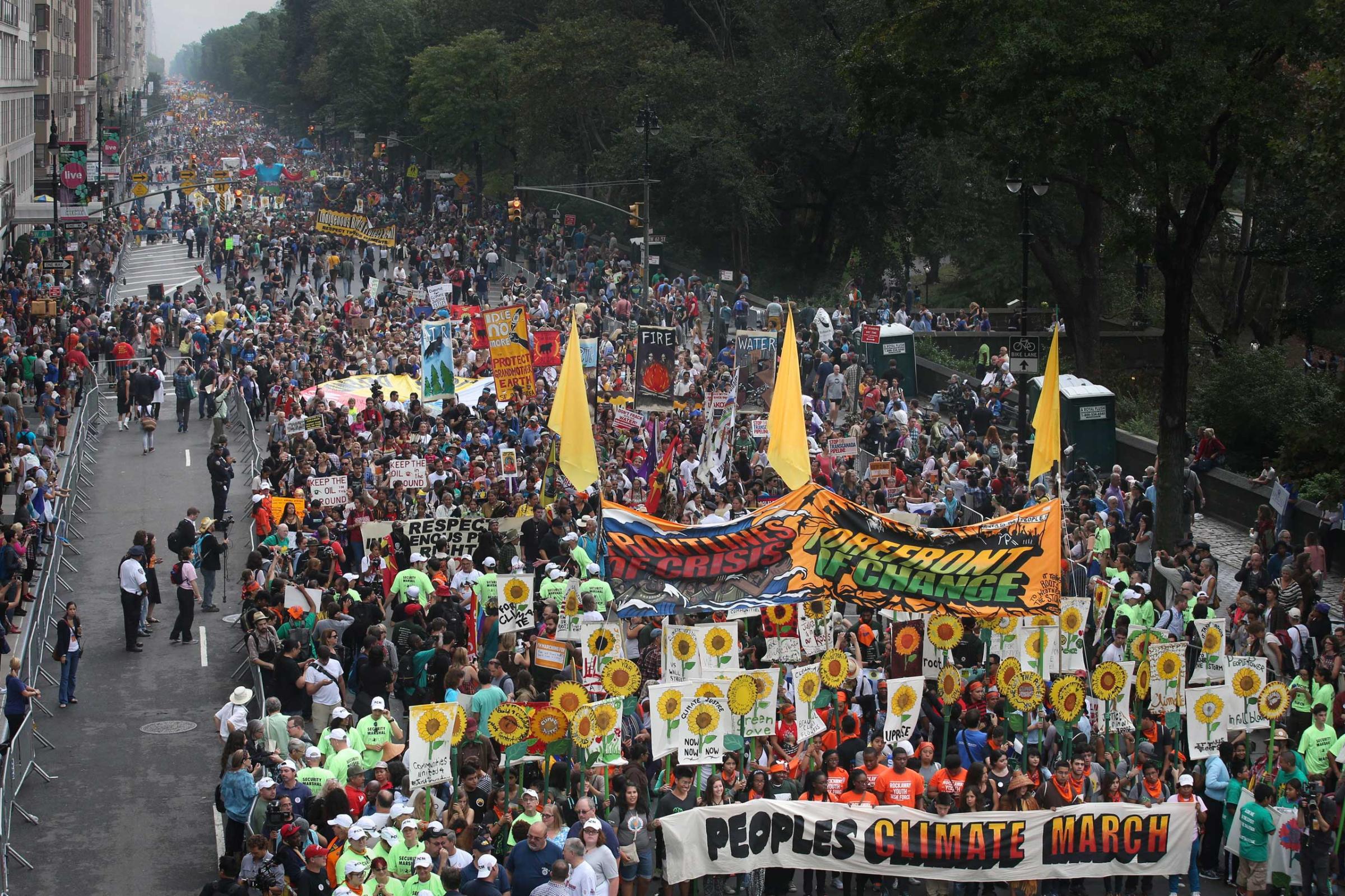
The myriad concerns surrounding climate change have proliferated in recent decades, galvanizing communities and movements across the globe. The significance of events such as the New York Climate March cannot be overstated; they serve not only as a summation of widespread anxiety but also as a clarion call for collective action rooted in justice and equity. This article examines the underlying principles of Bahá’í teachings as they apply to contemporary climate activism, elucidating how they inform the aspirations, achievements, and broader implications of today’s march.
At the heart of Bahá’í teachings lies the conviction that the oneness of humanity is imperative for the welfare of the planet. The idea that we are all interconnected mirrors the scientific understanding of our ecosystem: the climate crisis is indeed a global challenge that transcends national boundaries and social divisions. The New York Climate March exemplifies this ethos by drawing diverse individuals—regardless of race, creed, or social standing—into a unified pursuit of solutions to climate degradation. It represents a manifestation of the collective will and a potent reminder that collective efforts are essential to address issues which, if left unchecked, threaten to unravel the very fabric of society.
A prominent aspect of Bahá’í philosophy is the notion of justice. Within the context of climate action, justice is not merely a legal or procedural concern, but rather an ethical imperative. The realities of climate change disproportionately impact marginalized communities, exacerbating existing inequalities and injustices. Activists at the climate march are inherently advocating for a more equitable distribution of resources and responsibilities, emphasizing the belief that sustainability is not just an environmental imperative, but a moral obligation. This aligns with Bahá’í principles, which maintain that true justice necessitates the upliftment of disadvantaged groups and encompasses a shift away from exploitative practices towards sustainable models of coexistence.
Moreover, the Bahá’í teachings advocate for the integration of science and religion, positing that each domain must inform the other to navigate the complexities of contemporary challenges. The urgency to respond to the climate crisis is underscored by empirical evidence and scientific consensus; thus, the need for informed dialogue is paramount. Participants in the New York Climate March often represent a synthesis of these elements—activists emphasize scientific activism through data-led policies, while faith-driven motives inspire a keen commitment to stewardship and preservation of the Earth. This synergy between science and spirituality not only enhances the credibility of climate marchers but also imbues their endeavors with a sense of moral purpose.
The climate march serves as a platform for fostering global solidarity, which is quintessential to Bahá’í teachings. The principle of unity in diversity becomes especially significant within the realm of climate action; it posits that diversity in our approaches, ideas, and methodologies can amplify the effectiveness of collective action. By engaging with stakeholders from varying backgrounds—scientists, policymakers, indigenous leaders, and grassroots activists—the New York Climate March encapsulates the necessity of a broad coalition to tackle the multifaceted challenges presented by climate change. This diversity serves to enrich discourse and engender innovative solutions through collaborative engagement.
A key facet of the Bahá’í approach is the emphasis on education. Inadequate understanding of climate issues often leads to apathy or misplaced priorities. The climate march aims to remedy this gap by mobilizing public consciousness and fostering educational dialogues. By disseminating knowledge about the importance of sustainability and the particulars of climate science, the event cultivates a more informed and proactive citizenry. This aligns with Bahá’í teachings, which advocate that education is not merely an individual benefit, but a communal necessity essential for societal progress.
One cannot overlook the role of youth in catalyzing change; they embody the spirit of hope and innovation that is essential in confronting perception of despair often associated with climate change. The Bahá’í teachings emphasize the importance of empowering younger generations to take the helm in societal advancement. The presence of youth at the climate march not only conveys a message of urgency but also reflects a willingness to forge pathways towards a more sustainable future. Their involvement represents an intergenerational responsibility to ensure that solutions are not merely temporary, but inclusive and sustainable for future generations.
From a broader perspective, the march signifies a transformative societal awakening—an acknowledgment that climate change is an existential challenge that necessitates a collective reevaluation of values and priorities. The Bahá’í teachings urge humanity to adopt an outlook oriented towards the common good, advocating for an alignment of individual actions with collective needs. This consciousness is paramount for cultivating communal resilience in the face of climate adversities. The act of gathering—physically and ideologically—encourages an introspection regarding our relationship with the Earth, urging a shift from consumptive practices to sustainable modalities.
In conclusion, the New York Climate March stands as a formidable testament to the confluence of collective action, spiritual values, scientific inquiry, and social justice. It embodies the essence of Bahá’í teachings, which underscore the interconnectedness of humanity, the imperative of justice, and the necessity for an educated and united approach to global challenges. As we traverse increasingly turbulent environmental landscapes, the principles championed by the Bahá’í faith can serve as guiding tenets for those seeking solutions to mitigate the impact of climate change while fostering a more equitable and sustainable world. In this way, today’s march represents not only an act of protest but also a profound invitation to reflect, engage, and ultimately transform our collective destiny.