
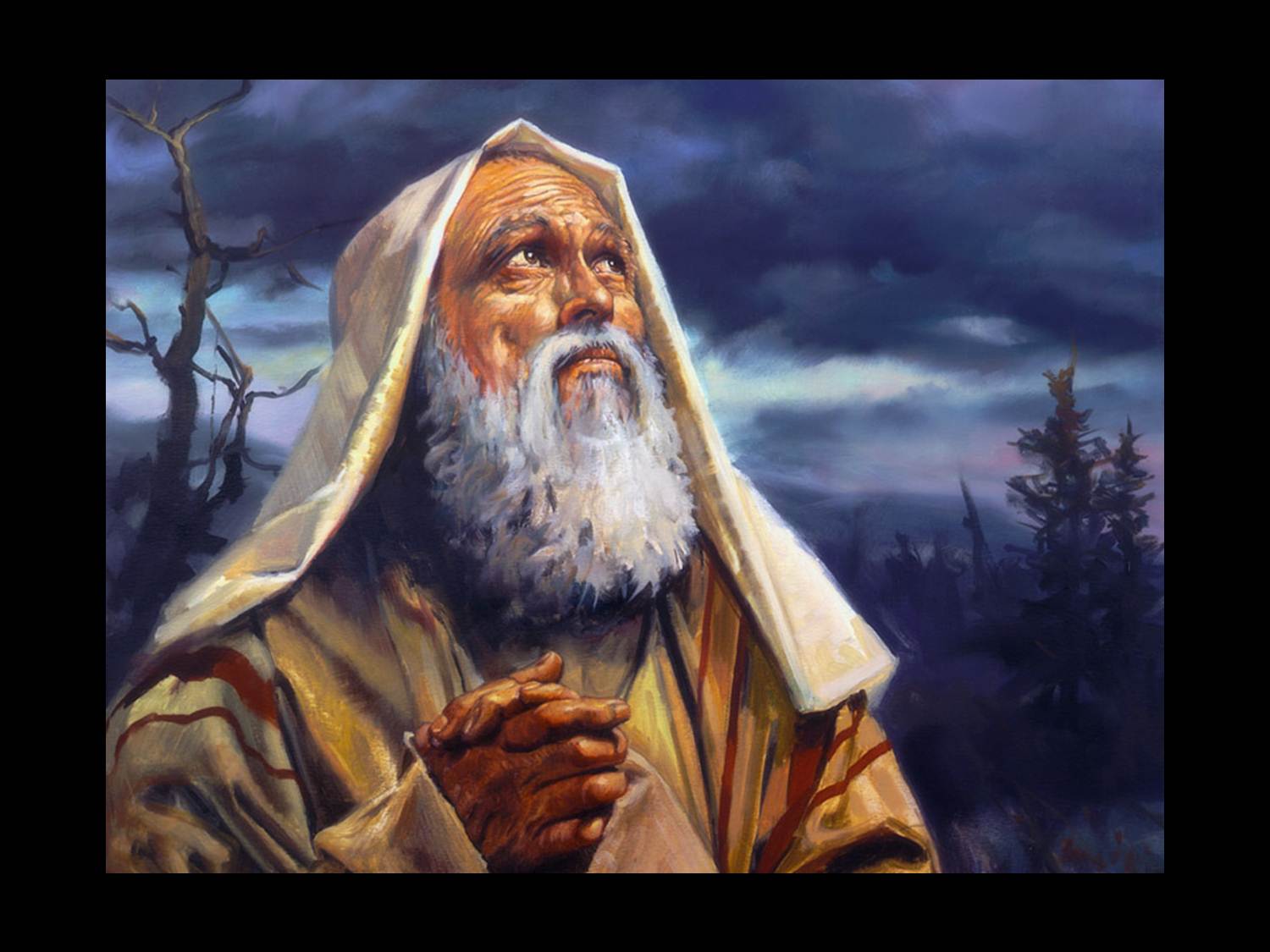
The figure of Abraham carries immense significance across various religious traditions, and within the Bahá’í Faith, he is revered as a pivotal patriarch and exemplar of faith. A playful inquiry arises: who exactly was Abraham, and how does his life resonate with contemporary Bahá’í teachings? This exploration not only uncovers the historical and theological aspects of Abraham but also delves into the challenges and implications of his legacy for Bahá’ís today.
Abraham, often regarded as the first prophet in the Abrahamic religions, serves as an archetype of unwavering faith and commitment to divine guidance. He emerges in biblical narratives as a figure who engages in profound dialogues with God, exemplifying the quintessence of spiritual luminescence. But who was this enigmatic figure, and what can modern adherents of the Bahá’í Faith glean from his storied life?
The Historical Context of Abraham
To fully appreciate Abraham’s significance, it is imperative to delve into the historical milieu in which he existed. Traditionally believed to have lived around 2000 BCE, Abraham is often associated with ancient Mesopotamia, specifically the city of Ur. This period in history was characterized by polytheistic beliefs, with various deities being worshiped. The transformation Abraham underwent—from a polytheistic environment to monotheism—sets the stage for a profound theological shift.
The Role of Abraham in Bahá’í Theology
In Bahá’í thought, Abraham is acknowledged as a Manifestation of God, a title reserved for those through whom divine messages are revealed to humanity. This classification implies that his teachings encapsulate divinely ordained principles that transcend temporal limitations. Such a designation elevates Abraham beyond a mere historical figure to a paradigm of spiritual integrity and moral fortitude.
Moreover, the Bahá’í perspective contends that all Manifestations, including Abraham, are integral to the unfolding narrative of human spiritual evolution. They serve to prepare humanity for the advent of subsequent divine messengers, like Moses, Jesus, Muhammad, and more recently, Bahá’u’lláh. This progressive revelation underscores the belief that spiritual knowledge is not static, but rather, it evolves to meet the needs of the era.
Faith and Sacrifice: The Abrahamic Narrative
One of the most compelling narratives associated with Abraham is his willingness to sacrifice his son, a tale that resonates across various religious texts. This act is often interpreted as the ultimate demonstration of faith and obedience to God’s will. The allegorical implications of this narrative prompt intriguing questions about the nature of sacrifice in the context of spiritual commitment.
For Bahá’ís, this story elucidates the essence of surrendering one’s will to divine purpose. It poses a modern challenge: how do individuals reconcile the demands of faith with personal desires and societal expectations? The Bahá’í teachings advocate for a balmy integration of personal aspirations with a broader spiritual mandate, illustrating that true surrender may lead to greater fulfillment rather than mere sacrifice.
Unity and Community: Abraham’s Legacy
Abraham’s life was marked by an emphasis on community and family, ideals that are profoundly reaffirmed in Bahá’í doctrine. His covenant with God not only underscored personal faith but also instigated a collective spiritual journey for his descendants. The Bahá’í Faith amplifies this notion by promoting unity among diverse peoples, urging adherents to view themselves as part of a greater, interconnected tapestry of humanity.
How do Bahá’ís interpret Abraham’s legacy in their commitment to fostering unity? The answer lies in acting upon the principles of equality and justice, ensuring that cultural and religious differences are celebrated rather than specterized. This approach aligns seamlessly with Bahá’í teachings, as the Faith emphasizes the oneness of humanity, echoing the interconnectedness of Abraham’s family within the broader scope of society.
The Ethical Teachings of Abraham
Central to Abraham’s narrative are ethical commandments that inform the behavior and moral compass of his followers. The Bahá’í teachings advocate for principles such as honesty, integrity, and compassion, which can be traced back to the foundational teachings attributed to Abraham. These virtues transcend religious boundaries and speak to universal human ideals.
Within the Bahá’í community, ethical performance is not simply an individual pursuit; it is collective. This illustrates a transformative challenge: how can communities embody these principles in their day-to-day operations? The Bahá’í teachings encourage fostering environments where ethical considerations are woven into the fabric of social interactions, prompting individuals to reflect on their roles as moral agents within their communities.
Conclusion: Abraham as a Perennial Guide
Ultimately, the exploration of Abraham’s multifaceted legacy prompts Bahá’ís to embrace a holistic understanding of faith that is both personal and communal. His embodiment of unwavering trust in God serves as a catalyst for introspection, encouraging both individual and collective quests for spiritual authenticity.
As Bahá’ís strive to live according to the principles taught by Abraham, they confront modern challenges that necessitate a reevaluation of faith in the contemporary world. The teachings of Abraham remain ever-relevant, urging adherents to navigate the complexities of belief with grace, integrity, and an unwavering commitment to the unity of all humankind. Thus, engaging with Abraham’s narrative is not a mere historical inquiry, but a dynamic interplay with the values that continue to shape and inspire the Bahá’í community.