
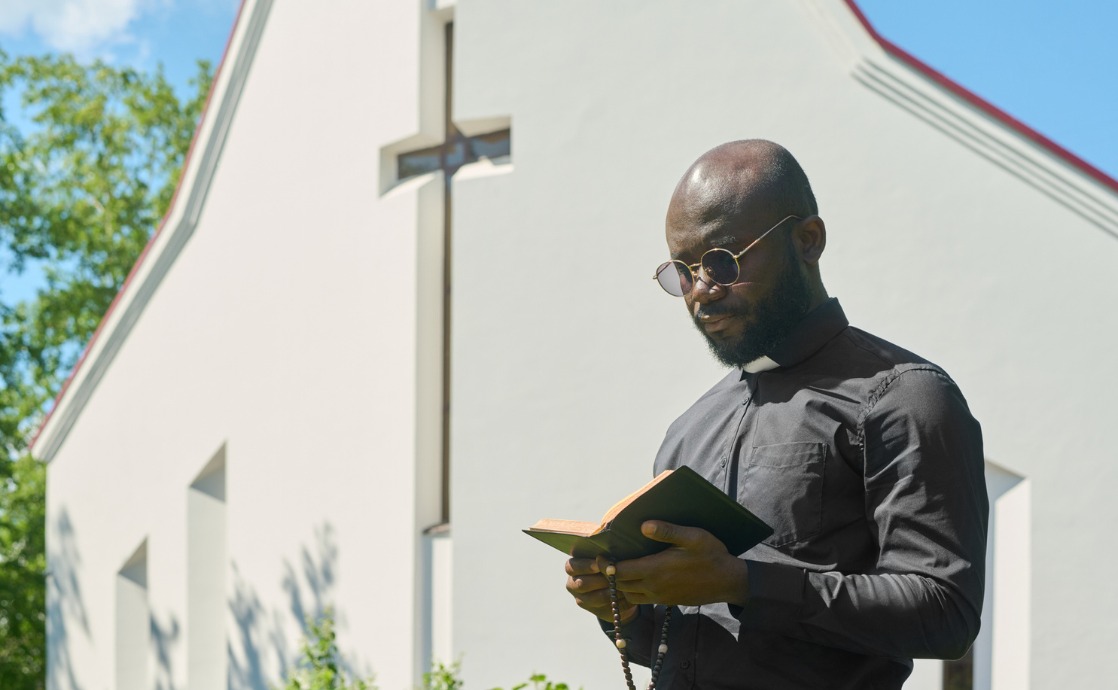
The Baha’i Faith, a relatively nascent yet profoundly impactful religious movement, has woven its tenets into the fabric of various socio-cultural landscapes across the globe. One particularly intriguing narrative is that of a Harlem preacher who ventured to Africa with the express purpose of disseminating Baha’i teachings. This exploration not only illuminates the dynamism inherent within Baha’i tenets but also exemplifies the global interconnectedness of faith traditions today.
At the heart of this journey lies the tenet of unity – a cornerstone of the Baha’i Faith. The notion posits that all religions are essentially expressions of a singular divine truth. This perspective encourages adherents to transcend geographical and cultural boundaries, fostering a sense of oneness among humanity. As the Harlem preacher took flight to Africa, the embodiment of this principle became evident; his journey was not merely a religious pilgrimage but rather an endeavor to form connections synonymous with the ethos of Baha’i teachings.
As the preacher arrived in Africa, he encountered a myriad of cultural practices and spiritual beliefs unique to the continent. The rich tapestry of African spirituality is characterized by a profound reverence for community, ancestral wisdom, and an intrinsic relationship with the natural world. These attributes harmoniously resonate with the Baha’i discourse on the interdependence of humanity and the environment. The preacher’s goal was to elucidate how the principles of the Baha’i Faith could complement existing spiritual frameworks, thus catalyzing a paradigm shift in understanding and practice among local communities.
Furthermore, the preacher’s mission was underscored by a palpable urgency: to address contemporary societal issues through the lens of Baha’i principles. Inequity, discrimination, and conflict are pervasive in both Africa and in global contexts; hence, the preacher sought to impart teachings that advocate for justice, equality, and the elimination of prejudice. By weaving these narratives into the fabric of local discourse, he endeavored to incite curiosity among audiences, compelling them to reflect on their societal constructs and consider alternative paradigms.
Central to the Baha’i Faith is the concept of the ‘Oneness of Mankind.’ This foundational belief posits that humanity is a collective entity, transcending tribal and national affiliations. In a continent marked by storied histories of colonialism and division, the preacher’s teachings aimed to dissolve entrenched divisions that have long hindered progress. His message was one of reconciliation, emphasizing that unity does not equate to uniformity but rather celebrates diversity while nurturing a cohesive human family.
The preacher’s sojourn was also impregnated with the spirit of service. Baha’i teachings espouse the importance of altruism and community engagement. In the spirit of service, he organized workshops and dialogues aimed at empowering local communities with the understanding and tools to enact social reform. The preacher’s presence became an emblem of hope, as he espoused the idea that solutions to pressing societal challenges could emanate from within, propelled by the collective efforts of community members nourished by a shared sense of purpose.
Baha’i teachings profoundly emphasize education as a vehicle for social transformation. As the preacher navigated through various regions in Africa, he highlighted the significance of knowledge acquisition, not only as a means to personal enlightenment but also as a catalyst for communal advancement. He illustrated how education can serve to alleviate poverty, dissolve ignorance, and cultivate a new echelon of leadership grounded in moral and ethical principles. This vision challenged traditional paradigms that may have relegated certain demographic groups to positions of disenfranchisement, urging a re-evaluation of educational access and opportunities.
Moreover, the preacher’s initiative served as an experimental platform for fostering interfaith dialogue. Engaging with leaders from diverse religious backgrounds, he fostered discussions that critiqued dogmatic approaches and encouraged collaborative initiatives. This was not only beneficial for promoting the Baha’i teachings but also served as a model for transformative practices among various religious traditions. The thirst for understanding betwixt differing perspectives planted seeds of curiosity that could bloom into effective strategies for peace and cooperation.
It is quintessential to note that the Harlem preacher’s mission was not devoid of challenges. Cultural sensitivities, misunderstandings, and misconceptions surrounding religious conversions were ever-present. However, the commitment to fostering genuine relationships and a willingness to engage in transparent dialogue laid the groundwork for constructive interactions. In doing so, the preacher epitomized a vital aspect of the Baha’i Faith – that of patience and resilience in the face of adversity.
In conclusion, the narrative of the Harlem preacher’s voyage to Africa underscores the Baha’i Faith’s expansive vision of unity, service, and empowerment through education. His journey invites us to reflect upon our own roles within this interconnected global community. By fostering a shift in perspective and piquing curiosity around the possibilities afforded by Baha’i teachings, the preacher not only furthered a great cause but also enriched the spiritual landscape of Africa, laying down foundational stones for future dialogues and collaborative endeavors. In a world fraught with division, narratives such as this are not merely inspirational; they embody the profound potential for transformative change through faith and understanding.