
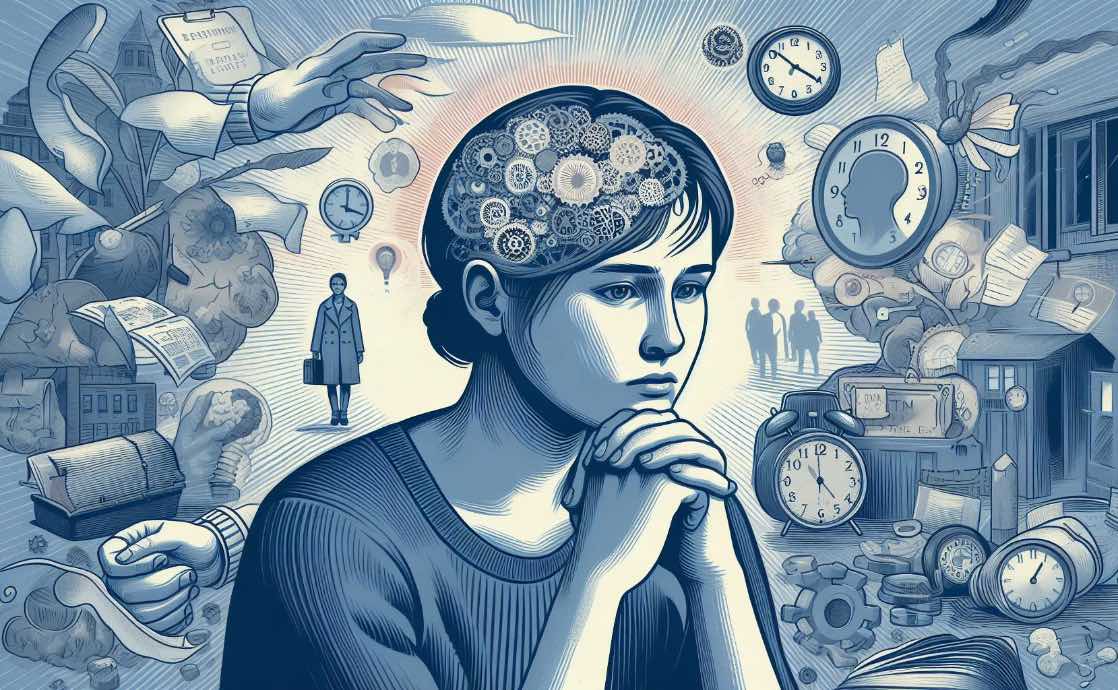
Why is it that we often find ourselves ensnared by the tendrils of our past? The Baha’i teachings provide profound insights into this existential quandary. This exploration allows us to delve into the complexities of human cognition and emotion, shedding light on how individuals may unwittingly tether themselves to bygone experiences. Such introspection invariably poses a challenging question: In what ways do our past experiences shape our present, and how can we liberate ourselves from their constraining grasp?
At the heart of Baha’i philosophy lies the belief in the transformative power of the present moment. Unlike the ancient conceptions of time, which often regarded it as a linear or cyclical phenomenon, Baha’i teachings elevate the present above all. The present is where life unfolds, where opportunities abound, and where transformation occurs. This focus creates a compelling paradox: while our past undoubtedly informs our identity, it can also become a formidable barrier to our growth. Recognizing this dichotomy is the first step towards emancipation.
One reason it is difficult to stop living in the past relates to the emotional resonance of our memories. Nostalgia, for instance, is a double-edged sword. On one hand, it serves as a repository of cherished experiences, imbuing our lives with meaning and connection. Conversely, it can morph into an emotional crutch, allowing us to retreat into an idealized version of what once was. This tendency prevents us from engaging fully with the richness of our current realities. The Baha’i teachings admonish us to steer clear of such escapism, urging individuals to derive lessons from their histories instead.
Moreover, external societal factors can exacerbate our inclination to cling to the past. Our cultures, environments, and even familial expectations may inadvertently valorize certain past experiences, creating a narrative that champions tradition over innovation. This cultural inertia can be debilitating; it fosters a sense of obligation to maintain the status quo rather than encouraging personal evolution. The Baha’i perspective advocates for a balance—an appreciation of the past that does not hinder the pursuit of future aspirations. Emphasizing the importance of progressive revelation, Baha’i doctrine asserts that each generation builds upon the previous one’s insights and findings.
Psychologically, the human brain is wired to prioritize memories that are emotionally significant. Our neural pathways are reinforced through repetition, leading us to recall selectively those experiences that evoke strong feelings—whether joy or regret. These memories can solidify into a mental framework that profoundly influences our present behavior and decisions. The teachings of Baha’u’llah encourage individuals to confront their past with courage, to sift through the fabric of their memories, and to identify which threads can be woven into a new tapestry of growth.
Another essential aspect of this discussion revolves around existential dread. The fear of the unknown often propels us back into the comforting embrace of familiarity—even if that familiarity is marred by pain or disappointment. The Baha’i teachings illuminate that this fear stems from a lack of trust in divine providence; certitude in an inherently benevolent universe cultivates resilience against the uncertainties of life. Embracing a forward-looking perspective mitigates the anxiety lodged in memories, allowing us to approach the future with an open heart and mind.
The importance of forgiveness cannot be overstated in this context. Baha’i principles of love and unity advocate for the necessity of forgiving oneself and others. Lingering grievances can act as shackles that keep us rooted in past transgressions. To extricate oneself from these bindings, one must actively engage in the processes of reflection, understanding, and ultimately, forgiveness. This transformative act is not only altruistic but also liberating for the individual, paving the way for renewed vitality and purpose.
To move beyond the confines of past experiences, self-awareness is a vital attribute. Individuals must cultivate the ability to discern when their thoughts drift towards nostalgia, identifying triggers that lead them into a spiral of recollection. Mindfulness and meditation can serve as valuable tools for enhancing self-awareness, enabling one to observe thought patterns without judgment. Baha’i teachings emphasize the importance of prayer and reflection as methods to reconnect with oneself, fostering a deeper understanding of one’s motivations and desires.
Embracing the philosophy of continuous growth is pivotal to overcoming the struggle of living in the past. The Baha’i teachings affirm that human development is an ever-evolving journey—marked by perpetual learning, unlearning, and relearning. Each moment presents an opportunity for transformation. It encourages the pursuit of knowledge, engagement with the community, and a commitment to service. Through collective action, shared experiences, and collaborative endeavors, individuals can transcend individual limitations, contributing to a greater narrative of progress.
Ultimately, the challenge lies in redefining our relationship with time itself. Instead of viewing the past as a burden, we can reframe it as a fertile ground for growth. The Baha’i teachings offer a salient reminder: the past is a chapter in an ongoing story, a narrative that can inspire resilience, creativity, and hope. By recognizing the transient nature of both past and future, we can fully engage with the present—a precious moment laden with potential, ripe for exploration and discovery.